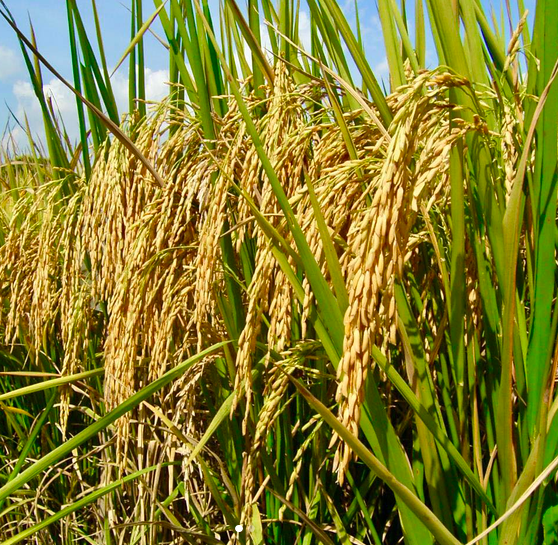

On August 6, 2026, Sarawak marked a watershed moment for Malaysian agriculture. At the Perennial Rice Pilot Project trial site in Kuala Baram, Miri, the Borneoland Paddy Sdn Bhd site where the state’s perennial rice trial was conducted, officials and industry partners gathered to witness the state’s first large-scale harvest of perennial rice: a rice variety that regenerates from its own root system instead of requiring replanting every season.
Premier Sarawak, Datuk Patinggi Tan Sri (Dr) Abang Haji Abdul Rahman Zohari bin Tun Datuk Abang Haji Openg, who officiated the harvesting ceremony, described it as a genuine agricultural breakthrough, announcing state backing for a dedicated research centre and milling facility to scale the technology across Sarawak.
For investors scanning Southeast Asia’s agri-tech landscape, this is more than a ceremonial photo-op. Investors and partners should treat the Kuala Baram harvest as an important validation milestone, not as proof of immediate commercial viability. The prudent approach is phased engagement: confirm official project naming and governance structures, monitor yield stability across multiple ratoon cycles, and assess farmer adoption economics before committing significant capital.
The Market Gap
Malaysia’s rice economy is defined by a structural shortfall. National rice self-sufficiency has stagnated at roughly 52–56%, well short of the government’s own targets of 75% by 2025 and 80% by 2030, according to statements from the Agriculture and Food Security Ministry. The country consumes close to 2.5–2.9 million tonnes of rice annually, yet domestic production covers only about half of that demand, a gap filled through imports channelled almost exclusively through Padiberas Nasional Berhad (BERNAS).
The numbers are even starker in Sarawak itself. Premier Sarawak, Datuk Patinggi Tan Sri (Dr) Abang Haji Abdul Rahman Zohari has publicly stated that Sarawak currently produces only about 21% of the rice it consumes, meaning the state imports the overwhelming majority of its staple food. On the national trade ledger, Malaysia’s rice import bill has been climbing steeply from roughly US$589 million in 2020 to well over US$1.09 billion by 2024, representing a compound annual increase of about 17% over that period, while the country’s broader food import bill surged from an estimated RM78.8 billion in 2023 to RM93.8 billion in 2024. Every ringgit of that gap represents a potential revenue pool for a domestic producer that can close it.
This is the essential investment logic: Sarawak, and Malaysia more broadly, is a structurally import-dependent rice market with government-level political will, dedicated land, and now a proprietary technology aimed squarely at closing the shortfall. That combination, chronic undersupply plus fresh state-backed technology, is precisely the setup investors look for in agricultural import-substitution plays across Asia.
The Technology Edge
Perennial rice is the product of nearly two decades of breeding research at Yunnan University in China, now transplanted to Sarawak through a collaboration with Borneoland Paddy Sdn Bhd. Unlike conventional paddy, which must be replanted after every harvest, perennial varieties regrow from their existing root systems, a trait proponents say can support multiple harvests over successive seasons, cut labour and land-preparation costs by as much as 50%, and produce grain with a comparatively lower glycaemic index than standard rice.
For a state like Sarawak, where labour shortages and rising input costs have long squeezed smallholder margins, a technology promising fewer replanting cycles and lower labour intensity is commercially compelling on its face. It also gives the state a genuine differentiation story: Sarawak is, by the government’s own account, the first Malaysian state to cultivate perennial rice at scale, with trial plots showing crop maturity in as little as two and a half months. That “first-mover” positioning is a marketing asset in its own right, and one the state government has already begun to use in its rice-export messaging.
Building the Investment Case Across Five Dimensions
1. Technology and R&D Infrastructure
The state government has committed to establishing a dedicated research centre and milling facility to support perennial rice, moving the project beyond a single trial plot toward institutionalised variety selection, seed multiplication, and quality assurance. Investment opportunities here include laboratory and germplasm facilities, agronomic monitoring systems for peatland cultivation, and partnerships extending the Yunnan University research relationship into a permanent technology-transfer arrangement.
2. Workforce Development
Scaling from a handful of trial plots to commercial cultivation across newly identified zones, including the Limbang-Lawas Valley, Gedong, Lingga, Daro, and Jemoreng, will require trained agronomists, extension officers, and a contract-farming network of smallholders willing to adopt an unfamiliar seed technology. This creates room for structured farmer-training programmes, technical academies, and public-private partnerships that de-risk adoption for rural communities while building a skilled agricultural labour base.
3. Marketing and Brand Positioning
Sarawak’s “first in Malaysia” narrative, combined with the lower-glycaemic-index health angle, gives the eventual commercial product a differentiated shelf story compared to standard imported rice. A branded “Sarawak Perennial Rice” identity, potentially supported by the newly established Sarawak Padi and Rice Board, could be positioned in premium domestic retail and, longer term, in export markets seeking specialty or health-oriented grain.
4. Distribution Infrastructure
The commercialisation pathway will depend on building what the project currently lacks: seed multiplication under biosecurity protocols, milling capacity, storage, and logistics linking Miri-area production zones to Kuching, Peninsular Malaysia, and potential regional export ports. The state’s move to establish the Sarawak Padi and Rice Board, intended to coordinate state-level development and potentially complement existing national channels such as BERNAS, signals an institutional channel through which distribution quotas and market access could be coordinated.
5. Revenue Generation and Market Capture
Revenue potential runs across multiple tiers: direct paddy and milled-rice sales into the domestic Sarawak and Malaysian market to displace imports; licensing or seed-supply revenue as cultivation expands to new zones; premium pricing for the health-positioned grain; and, if yields scale as hoped, export revenue to regional markets, echoing the Premier’s own comparison to Thailand’s rice-export model. Given that Sarawak alone imports around four-fifths of its rice consumption, even partial import substitution, say, moving self-sufficiency from 21% toward 50–60%, would represent a substantial, quantifiable shift of import spending into domestic production value.
The Path Toward Market Influence in Borneo and Malaysia
The realistic trajectory toward broader market share follows a phased build-out rather than an overnight takeover. Phase one is agronomic validation, confirming which of the 30 trial varieties perform reliably across multiple ratoon cycles and Sarawak’s distinctive peat and mineral soils. Phase two is infrastructure, the research centre, milling facility, and Sarawak Padi and Rice Board coming online to support multi-site cultivation. Phase three is scaled cultivation across the newly identified expansion zones, converting Sarawak’s own 21% self-sufficiency rate toward the state’s food-security targets. Phase four, contingent on the earlier phases succeeding, is surplus production feeding both Peninsular Malaysia’s shortfall and potential export markets.
Each phase compounds the next: agronomic proof unlocks investor and farmer confidence, infrastructure unlocks scale, scale unlocks distribution reach, and distribution reach unlocks the pricing power and market share that ultimately determine how much of Borneo’s, and Malaysia’s, rice consumption a Sarawak-grown, perennial-rice-based supply chain can capture.
A Considered Opportunity, Not a Guaranteed One
It is worth being direct about where this stands today: this is an early-stage, government-backed pilot, not yet a proven commercial operation. The current harvest represents 30 varieties on trial plots still being assessed for yield stability, taste, and long-term adaptation to Sarawak’s peatland soils, which behave differently from the mineral soils where perennial rice was originally developed. Building a genuine value chain, seed multiplication, farmer training, contract farming, milling, and export-grade quality control, is a multi-year undertaking, and Malaysia’s agricultural history includes several state-backed initiatives that struggled to scale beyond pilot plots due to financing gaps and slow farmer adoption.
For investors, this translates into a straightforward read: the addressable market is large and well-documented, the government commitment is real and growing, and the technology has cleared its first major public test. What remains to be proven, over the next two to three ratoon cycles, is whether yields hold up at scale. That is the milestone worth watching, and the one that will separate cautious early positioning from the export-hub ambitions now being built around Sarawak’s perennial rice story.
The strongest near-term recommendation is to verify the official institutional framework before treating the project as a fully investable commercial platform. Specifically, investors, offtakers, and technology partners should confirm the official name and governance status of the trial site, the mandate of the Sarawak Padi and Rice Board, and the implementation timeline for the proposed research centre and milling facility. Capital exposure should then be staged around measurable milestones: sustained yields across multiple harvest cycles, successful adaptation to Sarawak’s peat and mineral soils, farmer adoption rates, and the emergence of credible processing and distribution channels. In short, the opportunity is real, but the correct posture is disciplined early engagement rather than premature commercial assumption.