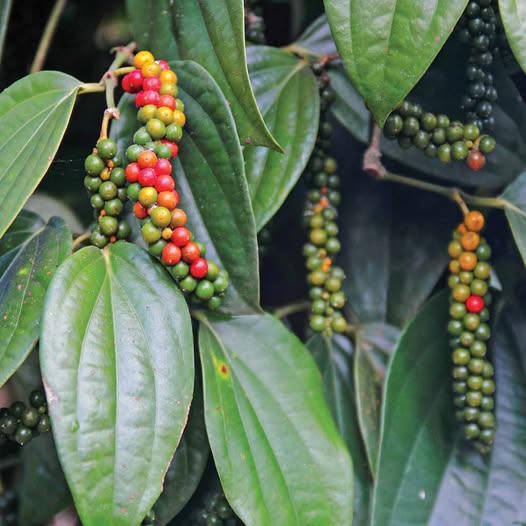

For centuries, pepper has reigned as the “King of Spices,” a commodity that shaped global trade routes, sparked explorations, and built empires.
Among the world’s pepper producing regions, Sarawak, the largest state in Malaysia, has carved out a distinctive niche.
Sarawak pepper is not merely an agricultural commodity; it is a heritage product, a brand synonymous with quality, and increasingly, a test case for how traditional agriculture can transform into a technology driven, globally competitive industry.
Sarawak produces over 98% of Malaysia’s total pepper output, making it the undisputed pepper heartland of the nation.
Yet the significance of Sarawak pepper extends far beyond national borders.
In premium markets from Tokyo to Berlin, Sarawak pepper is recognized for its unique floral aroma, balanced pungency, and exceptional cleanliness.
It is a product that commands premium prices not because of volume, but because of unmistakable quality.
However, the global pepper industry faces mounting challenges.
Climate change threatens traditional growing regions.
Supply chain disruptions have exposed the fragility of just in time commodity trading.
Consumers increasingly demand transparency, traceability, and sustainability.
And perhaps most critically, the halal integrity of food products has become a decisive factor for nearly two billion Muslim consumers worldwide.
This research review examines how Sarawak’s pepper industry is responding to these challenges through a three-pronged strategy: technological innovation in quality assurance, digital transformation of halal supply chains, and sustainable agricultural expansion.
At the heart of this transformation lies a vision articulated by Sarawak’s leadership, a vision that sees pepper not merely as a spice for the kitchen, but as a gateway to global industries spanning pharmaceuticals, cosmetics, and biotechnology.
Understanding Sarawak’s Unique Market Position
In the global pepper market, volume is dominated by major producers like Vietnam, Brazil, and Indonesia.
These nations produce pepper in vast quantities, often prioritizing yield over distinctiveness.
Sarawak competes differently.
The state’s pepper industry has built its reputation on premium quality, leveraging unique growing conditions including the equatorial climate, well drained soils, and traditional cultivation practices passed down through generations.
The economic data reveals both opportunities and vulnerabilities.
Between January and September 2025, Sarawak’s pepper export volume declined by 33%, dropping from 4,580 metric tonnes to 3,093 metric tonnes.
However, export value decreased by only 4%, from RM128 million to RM123 million over the same period.
This divergence between volume and value tells a crucial story: Sarawak pepper continues to command premium pricing even as quantities fluctuate.
The market recognizes and rewards quality.
Government Commitment to Industry Expansion
Recognizing the strategic importance of pepper, both federal and state governments have mobilized substantial resources.
Under the 12th Malaysia Plan, RM59.6 million has been allocated to support pepper farmers through initiatives including the New Pepper Planting Scheme and the Mature Pepper Planting Scheme.
Additionally, RM3 million has been set aside specifically for the Premium Pepper Production Programme between 2022 and 2025, designed to encourage cultivation of high-quality pepper for niche markets.
The expansion vision extends beyond incremental growth.
Plantation and Commodities Minister have proposed developing large scale pepper plantations of up to 10,000 hectares in Sarawak, partnering with private sector entities alongside smallholders.
This represents a strategic shift from fragmented smallholder production toward more consolidated, commercially viable operations.
As Johari noted in Parliament, drawing lessons from the palm oil sector where 73% of production comes from large estates, scaling up enables Malaysia to achieve export growth and job creation on a transformative scale.
While Sarawak dominates national production, other states are also investing in pepper’s future.
Johor has allocated RM500,000 for its Pepper Expansion Programme under the technology transfer initiative, with an additional RM500,000 proposed for 2026.
As of September 2025, 9.7 hectares of new pepper growing areas have been developed in Johor by 43 smallholders and two private companies, bringing the state’s total cultivation area to 30.9 hectares managed by 121 smallholders.
This expansion reflects recognition that Peninsular Malaysia currently imports between 2,000 and 3,000 metric tonnes of pepper annually, primarily from Sarawak and overseas.
By increasing local production, Malaysia can reduce import dependence while ensuring price stability for consumers and businesses.
Sarawak as a Global Pepper Powerhouse
The transformation of Sarawak’s pepper industry is guided by a clear strategic vision articulated by the state’s highest leadership.
Premier Sarawak, Datuk Patinggi Tan Sri (Dr) Abang Haji Abdul Rahman Zohari bin Tun Datuk Abang Haji Openg has consistently emphasized that Sarawak must move beyond commodity production toward high value, technology driven industries.
The Premier’s vision rests on several core pillars.
First, he has called for the modernization of agriculture through digital technology, recognizing that traditional farming methods alone cannot meet the demands of global markets.
Second, he has championed the concept of “economy of scale” while preserving the quality distinctiveness that makes Sarawak products unique.
Third, he has positioned Sarawak as a leader in halal certification and traceability, leveraging the state’s Islamic identity as a competitive advantage in global trade.
Under his leadership, Sarawak has pursued an aggressive agenda of digital transformation across all economic sectors.
The Post COVID Development Strategy (PCDS) 2030 explicitly targets the transformation of Sarawak into a net food exporter, with pepper identified as one of the strategic commodities for technological upgrading.
The Premier’s aspiration is clear: Sarawak pepper should not merely be sold as a raw spice but should serve as the foundation for pharmaceutical, nutraceutical, and cosmetic products that command premium prices in global markets.
This vision aligns with broader national objectives.
Malaysia’s halal product exports reached RM61.79 billion in 2024, reflecting a 15% increase from the previous year, while the country maintained its leading position in the Global Islamic Economy Indicator for the tenth consecutive year.
The Halal Industry Master Plan 2030 (HIMP 2030) targets RM75.2 billion in halal exports by 2030.
Sarawak pepper is positioned as a flagship product within this national strategy.
Pepper in Pharmaceuticals and Cosmetics
The transformation of Sarawak pepper from kitchen spice to industrial ingredient rests on solid scientific foundations.
Black pepper (Piper nigrum) contains a range of bioactive compounds, most notably piperine, which gives pepper its pungency.
However, piperine’s significance extends far beyond flavor.
Research has demonstrated that piperine enhances the bioavailability of various nutrients and drugs by inhibiting enzymes that metabolize these compounds in the liver and intestines.
This property makes pepper oleoresin, a concentrated extract containing essential oils and resins, valuable in pharmaceutical and nutraceutical applications.
When incorporated into product formulations, pepper extracts can improve the absorption of vitamins, minerals, and active pharmaceutical ingredients, potentially allow lower dosages while maintain therapeutic effects.
The Malaysian Pepper Board’s R&D Initiatives
The Malaysian Pepper Board (MPB) has been actively pursuing research and development to unlock these industrial applications.
A notable example is the development of pepper-based throat drops, a prototype product that leverages pepper oleoresin’s bio enhancing properties.
This prototype has undergone a comprehensive testing regime including antioxidant and anti-inflammatory bioassays, acute toxicity studies, sensory evaluation, and stability testing.
What makes this initiative significant is the scientific rigor applied.
Rather than simply adding pepper flavour to a throat drop, the MPB’s approach focuses on functional efficacy, demonstrating that pepper extracts provide measurable benefits beyond basic nutrition.
This evidence-based approach is essential for meeting pharmaceutical and nutraceutical regulatory standards, whether from Malaysia’s National Pharmaceutical Regulatory Agency (NPRA), the US Food and Drug Administration (FDA), or the European Medicines Agency (EMA).
Cosmeceutical Applications
The cosmetic industry represents another frontier for Sarawak pepper.
Pepper extracts have demonstrated antioxidant properties, making them potentially valuable in anti-aging formulations.
Additionally, the warming and circulation enhancing effects of topical pepper applications have traditional uses that are now being subjected to scientific validation.
The MPB’s research into cosmeceutical applications involves synthesizing new chemical compounds based on pepper bioactive components and conducting biological assays to identify optimal formulations.
This work positions Sarawak pepper not as a bulk commodity but as a high value ingredient in global personal care markets, where consumers increasingly seek natural, ethically sourced, and scientifically validated products.
As premium products command higher prices, they attract counterfeiters and adulterators.
Ground black pepper is particularly vulnerable to fraud, as cheaper materials including papaya seeds, chili stems, and other plant matter can be ground and mixed with authentic pepper to increase volume while reducing quality.
Beyond adulteration, origin fraud presents another challenge: pepper from lower prestige regions may be misrepresented as Sarawak pepper to capture premium pricing.
Traditional quality control methods have significant limitations.
Visual inspection cannot detect finely ground adulterants.
Chemical analysis, while accurate, is time consuming and expensive, requiring specialized laboratories and trained personnel.
For smallholders and small to medium enterprises, comprehensive quality testing may be prohibitively costly.
The AgriSmartEye Innovation
In response to this challenge, researchers at Curtin University Malaysia developed AgriSmartEye, a reliable, low-cost system that combines hyperspectral imaging technologies with deep learning artificial neural networks to analyse the authenticity and geographical origins of ground black pepper.
This innovation won the prestigious Curtinnovation Award in 2021 and gold at the Innovation Technology Exposition (InTEX22) in Sarawak.
The research team included Deputy Dean of Research and Development Professor Agus Saptoro, PhD student Terence Chia Yi Kai, and research collaborators Associate Professor Garenth Lim King Hann and Associate Professor Chua Han Bing.
Their achievement demonstrates the capacity of Sarawak’s academic institutions to develop world class solutions to real world industry problems.
Understanding AgriSmartEye requires grasping the fundamentals of hyperspectral imaging.
Traditional cameras capture images in three broad wavelength bands: red, green, and blue.
While this produces images that approximate human vision, it discards enormous amounts of spectral information.
Hyperspectral imaging, by contrast, captures hundreds of narrow, contiguous wavelength bands across the electromagnetic spectrum, from visible light through near infrared.
Every material has a unique spectral signature, a pattern of how it reflects, absorbs, and transmits light at different wavelengths.
These signatures are as distinctive as fingerprints.
For pepper, subtle differences in chemical composition (piperine content, essential oil profiles, moisture levels) produce measurable spectral differences between authentic Sarawak pepper and adulterants or pepper from other regions.
Capturing spectral data is only half the solution.
Interpreting that data requires sophisticated analytical capabilities.
AgriSmartEye employs deep learning artificial neural networks (DLANN), a form of machine learning inspired by the biological neural networks in animal brains.
The neural network is “trained” on hundreds of samples of known origin and purity.
During training, the network learns to associate specific spectral patterns with specific characteristics.
This pattern means Sarawak origin, that pattern means papaya seed adulterant.
Once trained, the network can analyze a new sample in under three minutes, providing results with near 100% accuracy.
AgriSmartEye represents a paradigm shift in quality assurance.
For the first time, rapid, affordable, laboratory grade testing becomes available to producers throughout the supply chain.
Smallholders can verify their product’s quality before sale, strengthening their bargaining position.
Exporters can provide credible certification of origin and purity to international buyers.
Regulators can conduct cost effective market surveillance to detect and deter fraud.
Beyond pepper, the technology has potential applications across other high value commodities.
The developers note that AgriSmartEye can be adapted for coffee, cocoa, sago, and vanilla, all products where origin authentication and adulteration detection are critical.
This spillover potential multiplies the innovation’s impact across Sarawak’s agricultural sector.
The Growing Importance of Halal Assurance
For the nearly two billion Muslim consumers worldwide, halal certification is not merely a marketing feature but a religious obligation.
The global halal food market is valued at over US$1.9 trillion, with projections reaching US$3.36 trillion by 2028 according to the State of the Global Islamic Economy (SGIE) Report 2024/25.
Within this vast market, trust is the most valuable currency.
Traditional halal certification relies on paperwork, periodic inspections, and audits.
While generally effective, this system has vulnerabilities: administrative delays, misplaced documentation, potential for fraud, and limited real time visibility into supply chain conditions.
For products like pepper, which may change hands multiple times between farm and fork, maintaining halal integrity throughout the chain presents significant challenges.
Researchers at Universiti Teknologi PETRONAS have developed an innovative solution called HalalChain, a blockchain based system specifically designed for halal food supply chains.
Published in the peer reviewed journal Results in Engineering, the HalalChain model integrates blockchain technology, Internet of Things (IoT) sensors, and smart contracts to address the transparency and compliance challenges that plague traditional certification.
The technical architecture is sophisticated yet practical.
HalalChain employs a three-layer structure: IoT devices (DIoT) collect data from physical supply chain operations, blockchain nodes (NBc) store cryptographic hashes of that data, and decentralized certification authorities (Ad) perform verification functions.
This decentralization is crucial: no single party can unilaterally alter records or grant certification, reducing the risk of fraud or corruption.
The research team’s experiments demonstrated impressive performance metrics.
HalalChain achieved a 99.8% tampering detection rate, a throughput of 38 transactions per second (TPS), and consensus times of 1.2 to 2.5 seconds.
Even under extreme conditions where 50% of data was deliberately corrupted, the system maintained 96.8% detection accuracy, significantly outperforming the comparison model AgriBlockIoT at 80.5%.
Particularly relevant for pepper exports, the system can monitor and verify conditions critical to halal integrity.
IoT sensors track transportation temperatures, ensuring products remain within acceptable ranges.
The system verifies that handling facilities maintain required hygiene standards.
For any halal certified product, including pepper used in halal food manufacturing, these verifications provide documented proof of compliance throughout the supply chain.
Blockchain Implementation in Sarawak
Sarawak is positioning itself at the forefront of halal technology adoption.
The Tanjung Manis Halal Hub has attracted substantial investments and established itself as a platform serving international demand.
This purpose-built ecosystem strategically situates halal producers near export infrastructure and logistics networks, facilitating compliance with international standards.
For young entrepreneurs in Sarawak, blockchain technology opens new opportunities.
As explained in analyses of halal tech trends, blockchain creates a tamper proof digital diary documenting each phase of production and distribution including slaughter, processing, packaging, and logistics.
This documentation builds credibility that traditional paper certificates cannot match.
A practical example illustrates the value: a Sarawak based seafood exporter shipping frozen prawns to Dubai can use blockchain to log every detail including catch location, processing methods, facility hygiene standards, cold chain temperatures, and certification status.
Importers and consumers scan a QR code to instantly trace the product’s provenance.
The same model applies to pepper exports, where buyers demand assurance that the spice has been handled in compliance with halal standards.
The economic rationale for blockchain adoption extends beyond compliance.
By demonstrating halal integrity through transparent, tamper proof digital records, Sarawak pepper producers can access premium markets that require verified certification.
This alignment with global digital compliance systems offers first mover advantages to early adopters.
Industry data suggests significant efficiency gains.
A Malaysian blockchain based halal traceability initiative reportedly increased certification efficiency by over 40% and improved transparency in supply chain data, helping exporters demonstrate halal integrity to global buyers.
For small to medium enterprises that previously found halal certification complicated and expensive, digitalization reduces barriers to entry.
Furthermore, blockchain integration supports Sarawak’s broader digital economy ambitions.
Young entrepreneurs building food and beverage businesses can adopt digital record keeping from the start, tracking suppliers, batch codes, cleaning practices, and storage conditions, making integration into blockchain enabled halal traceability systems seamless.
This approach streamlines compliance, reduces audit burdens, and enhances global marketability.
Sustainable Farming Through IoT and Smart Agriculture
The transformation of Sarawak pepper extends beyond processing and certification to fundamental growing practices.
The Malaysian Pepper Board, in collaboration with state agencies, is introducing new technologies to enhance productivity, reduce labour requirements, and lower production costs.
Fertigation systems, a portmanteau of “fertilizer” and “irrigation,” represent one significant innovation.
This soilless cultivation method delivers nutrient solutions directly to plant roots through drip irrigation, optimizing resource use while minimizing waste.
Compared to traditional soil-based cultivation, fertigation can increase yields, reduce water consumption, and allow cultivation on land previously unsuitable for pepper.
The Internet of Things (IoT) enables real time monitoring of growing conditions.
Sensors deployed throughout pepper farms measure soil moisture, temperature, humidity, light levels, and nutrient concentrations.
This data transmits wirelessly to central platforms where farmers and agricultural extension officers can access it through smartphones or computers.
When sensors detect conditions falling outside optimal ranges (soil too dry, temperature too high), the system can alert farmers, enabling rapid corrective action.
Some systems can automatically activate irrigation or adjust shade netting.
This real time responsiveness contrasts sharply with traditional farming, where problems might be detected only when visible symptoms appear, often too late to prevent yield losses.
The same hyperspectral imaging technology that powers AgriSmartEye in the laboratory can be deployed on drones to monitor growing crops.
Drone based hyperspectral imaging provides farmers with detailed maps of crop health across their entire plantation.
Different stress factors including water deficiency, nutrient shortage, pest infestation, and disease infection produce distinct spectral signatures detectable before visible symptoms emerge.
This predictive capability transforms farm management from reactive to proactive.
Rather than treating problems after they appear, farmers can intervene early, often with smaller quantities of pesticides or fertilizers, reducing both costs and environmental impact.
For pepper smallholders operating on narrow margins, these efficiency gains can significantly improve profitability.
Labour shortages represent a persistent challenge for Malaysian agriculture.
Young workers increasingly prefer urban employment to physically demanding farm work.
The pepper industry, like rubber and oil palm before it, faces an aging farmer population with insufficient replacement.
Technology adoption addresses this challenge directly.
Automated irrigation systems reduce the need for manual watering.
Drone based monitoring replaces laborious field walking.
Sensor networks provide data that would otherwise require trained scouts.
While pepper will always require human skill and attention, technology can reduce labour requirements substantially, making pepper farming more viable for smaller operations and older farmers.
Beyond productivity gains, technology adoption supports environmental sustainability.
Precision agriculture, applying water, fertilizer, and pesticides only where and when needed, reduces chemical runoff into waterways and minimizes greenhouse gas emissions from fertilizer production.
IoT monitoring enables optimization of resource use, aligning with international Environmental, Social, and Governance (ESG) standards increasingly demanded by global buyers and investors.
Sarawak’s commitment to sustainable agriculture is not merely altruistic but strategic.
European and North American markets increasingly require documentation of sustainable practices throughout supply chains.
By adopting smart farming technologies, Sarawak pepper producers position themselves to meet these requirements, maintaining access to premium markets while competitors relying on conventional methods may face barriers.
The Smallholder Challenge
The majority of Sarawak’s pepper farmers are smallholders, cultivating modest plots of a few hectares or less.
While smallholder production supports rural livelihoods and maintains traditional knowledge, it also presents challenges for technology adoption and quality consistency.
Individual smallholders may lack capital for expensive equipment, technical expertise for digital systems, or bargaining power in commodity markets.
Recognizing these challenges, the Malaysian Pepper Board has implemented extensive training programs.
During the 12th Malaysia Plan period, more than 52,000 smallholders have attended 6,605 training sessions on Good Agricultural Practices (GAP).
These sessions cover everything from planting techniques and pest management to harvesting methods and post-harvest handling.
The scale of this training effort is significant.
With an estimated 70,000 pepper farmers in Sarawak, reaching 52,000 represents substantial penetration.
Training content has evolved from purely agricultural topics to include digital literacy, quality management, and market access strategies.
Financial support complements training.
The New Pepper Planting Scheme has benefited 896 farmers in Serian alone, receiving RM4.47 million across 113.9 hectares.
The Mature Pepper Planting Scheme has supported 1,622 farmers with RM5.37 million covering 259.4 hectares.
These schemes reduce the capital barriers to pepper cultivation, enabling smallholders to establish new plantings or rejuvenate existing ones.
Beyond direct planting schemes, the MPB provides agricultural inputs, technical guidance, and support for certification.
For smallholders seeking organic or premium certifications, this assistance can be decisive in accessing higher value markets.
The proposal for large scale pepper plantations of up to 10,000 hectares explicitly includes partnerships between private sector entities and smallholders.
This model, similar to successful schemes in oil palm, allows smallholders to benefit from economies of scale while retaining ownership of their land.
The private partner provides technical expertise, processing facilities, and market access; the smallholder provides land and labour; both share in the returns.
This collective approach addresses the fragmentation that has historically limited smallholder competitiveness.
By aggregating production, smallholders can achieve volumes sufficient for containerized export, quality consistency for premium markets, and investment capacity for technology adoption.
Global Market Trends and Export Performance
Sarawak’s pepper export performance in 2025 reveals both resilience and vulnerability.
The 33% volume decline to 3,093 metric tonnes between January and September 2025 reflects challenging conditions, whether from weather disruptions, pest pressures, or market dynamics.
However, the value decline of only 4% to RM123 million demonstrates that remaining exports achieved higher average prices.
This pattern, volume down but value relatively stable, is consistent with a market that values quality over quantity.
Buyers unwilling to compromise on Sarawak’s distinctive characteristics continue to pay premium prices even when supply tightens.
For producers, this provides some insulation from the brutal price competition that characterizes commodity pepper markets.
Sarawak pepper commands particular loyalty in specific markets.
Japan has historically been a key destination, with Japanese buyers valuing the spice’s floral aroma and balanced pungency.
European markets, particularly Germany and the Netherlands, serve as distribution hubs for the broader European Union.
The Middle East, with its large Muslim population and demand for halal certified products, represents a growing opportunity.
The expansion of halal certification and blockchain traceability specifically targets these premium markets.
Middle Eastern buyers, in particular, require documented halal integrity throughout the supply chain.
By providing this documentation through digital systems, Sarawak pepper can differentiate itself from competitors who cannot offer equivalent assurance.
Within Malaysia, demand for pepper continues to grow.
Peninsular Malaysia imports 2,000 to 3,000 metric tonnes annually, primarily from Sarawak but also from overseas sources.
This import dependence reflects both transportation costs (moving pepper across the South China Sea) and quality preferences, as some buyers specifically want Sarawak pepper for its distinctive characteristics.
The Johor expansion program explicitly aims to reduce import dependence while supporting local farmers.
By increasing Peninsular production, Malaysia can capture value that currently flows to international suppliers while strengthening food security.
For Sarawak producers, Peninsular demand provides a reliable domestic market that complements export sales.
Challenges and Future Directions
Pepper cultivation faces significant climate risks.
Excessive rainfall can promote fungal diseases that devastate vines.
Drought during flowering reduces fruit set and yields.
Rising temperatures may shift suitable cultivation zones, potentially requiring relocation of production areas.
Climate adaptation strategies are essential for long term industry sustainability.
The fertigation systems and IoT monitoring discussed earlier contribute to resilience by optimizing growing conditions regardless of weather variability.
Shade management, water storage, and disease resistant varieties are additional tools in the adaptation toolkit.
Youth Engagement
Attracting young people to pepper farming remains challenging despite technological modernization.
Farming is perceived as physically demanding, financially uncertain, and socially less prestigious than urban employment.
The aging farmer population threatens the industry’s long-term viability.
Technology adoption may help address this challenge.
Younger farmers, comfortable with digital tools, may find technologically sophisticated agriculture more appealing than traditional methods.
Drone piloting, data analysis, and digital marketing offer career paths within agriculture that differ from conventional farming.
The integration of pepper production with pharmaceutical and cosmetic industries may also attract young people interested in science and technology.
Global Competition
Sarawak cannot compete with Vietnam, Brazil, or Indonesia on volume.
These countries produce pepper at significantly lower costs due to larger plantation sizes, lower labour costs, or more favourable growing conditions.
Attempting to match their volume would be strategically misguided.
The correct competitive strategy is differentiation: quality, authenticity, halal integrity, and technological sophistication.
Sarawak pepper must be positioned as the premium choice for buyers who value these attributes and are willing to pay for them.
This strategy requires continuous investment in quality assurance, certification, and branding, all areas where current initiatives are active.
Technology Adoption Barriers
Despite the promising innovations described throughout this review, technology adoption faces real barriers.
Smallholders may lack capital for IoT sensors, drones, or blockchain integration.
Digital literacy varies significantly across the farming population.
Infrastructure limitations including internet connectivity in rural areas and reliable electricity for electronic equipment constrain what is technically possible.
Addressing these barriers requires coordinated action from government, industry, and academic institutions.
Subsidies or financing programs can reduce capital barriers.
Training programs can build digital skills.
Infrastructure investment can expand connectivity.
The current trajectory is promising, but sustained commitment will be necessary for full transformation.
The Road Ahead
Sarawak pepper stands at a crossroads.
The traditional model of smallholder cultivation, commodity pricing, and paper-based certification faces mounting pressures from climate change, global competition, and demanding consumers.
Yet the response to these pressures demonstrates remarkable dynamism.
The vision articulated by Premier Datuk Patinggi Tan Sri (Dr) Abang Haji Abdul Rahman Zohari of Sarawak as a global pepper powerhouse leveraging technology for quality assurance, halal integrity, and industrial applications is being translated into action.
AgriSmartEye brings laboratory grade testing to the farm gate.
Blockchain technology secures halal certification across complex supply chains.
IoT sensors and drones optimize cultivation while reducing environmental impact.
Research into pharmaceutical and cosmetic applications opens new markets beyond the kitchen.
None of these transformations are complete.
Technology adoption remains uneven.
Export volumes have declined even as values held relatively steady.
The full potential of pepper-based pharmaceuticals and cosmetics remains largely unrealized.
Yet the direction is clear and the momentum is building.
For Sarawak, pepper represents more than an agricultural commodity.
It is a test case for the broader transformation of the state’s economy from resource extraction to knowledge intensive, technology enabled, sustainably managed production.
Success in pepper can provide models applicable to other crops including sago, cocoa, and rubber and to other industries.
Failure would close off pathways for diversification that Sarawak urgently needs.
The global market for premium, authentic, halal certified, sustainably produced agricultural products continues to grow.
Sarawak pepper, with its distinctive characteristics and the technological infrastructure now being built around it, is well positioned to capture increasing share of this market.
The spice that once funded empires may yet fund Sarawak’s next stage of development.
References
Chia, T. Y. K., Saptoro, A., Lim, G. K. H., & Chua, H. B. (2021). AgriSmartEye: Hyperspectral imaging with deep learning for ground black pepper authentication. Curtin University Malaysia.
Halal Practitioner. (2025). Emerging halal technology trends: Opportunities for businesses and regulators. Retrieved from https://halalpractitioner.com
Halal Practitioner. (2025). Top technology trends transforming halal businesses in 2025. Retrieved from https://halalpractitioner.com
Johari Abdul Ghani. (2025, November 19). Parliamentary response on pepper plantation expansion [Press coverage]. New Straits Times.
Malaysian Pepper Board. (2025). Annual report on pepper industry development. Malaysian Pepper Board.
Ministry of Plantation and Commodities. (2025). Pepper industry development under the 12th Malaysia Plan. Government of Malaysia.
SarawakYES. (2025). Halal tech in Sarawak: Why blockchain matters for young entrepreneurs. Retrieved from https://www.sarawakyes.com
State of the Global Islamic Economy Report. (2024/25). DinarStandard.
Stephen Rundi Anak Utom. (2025, December 3). Departmental summary speech at Sarawak State Legislative Assembly. United Daily News.
The Star. (2025, October 5). Johor expands support and investment for pepper industry. Retrieved from https://www.thestar.com.my
Universiti Putra Malaysia. (2025). Virtual Halal Mobility 2025: Fostering global understanding of the halal supply chain and food security. Retrieved from https://halal.upm.edu.my
Universiti Teknologi PETRONAS. (2025). HalalChain: A blockchain and IoT based system for halal food supply chain integrity. Results in Engineering.
Zahari Sarip. (2025, October 5). Johor pepper expansion programme announcement [Press coverage]. The Star.