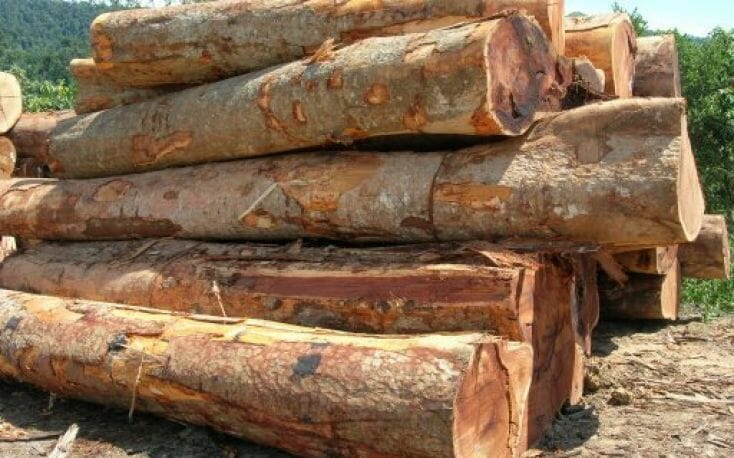

The Sarawak government’s decision on April 15, 2026, to halve royalty rates and selected statutory charges for logs from Forest Timber Licences (FTLs) and Forest Plantation Licences (LPFs) represents a defining intervention in one of Malaysia’s most historically significant timber economies.
Announced as a temporary one-year measure with a mandatory review, the policy excludes the Timber Industry Tariff H0272502 and is scheduled for implementation within two (2) weeks of the announcement.
The Timber Industry and Sarawak’s Economy Since 1963
When Sarawak joined the Malaysian Federation in 1963, it retained constitutional autonomy over its forest resources, a legacy of colonial-era governance arrangements that would profoundly shape the state’s economic trajectory.
Yet the immediate post-independence period did not herald a timber boom.
Sarawak’s forests, particularly its hill forests, yielded less exportable timber per hectare than the rich volcanic soils of the Philippines, Sabah, and East Kalimantan, rendering them economically marginal in an era when international hardwood markets were dominated by more accessible and commercially valuable stands.
The timber industries of neighbouring territories boomed through the 1950s and 1960s while Sarawak remained a minor player, its ramin-rich peat swamp forests supporting only modest sawmilling operations established in the late 1940s and 1950s.
The turning point arrived in the late 1970s, when declining Philippine and Indonesian log exports created a supply vacuum that East Asian plywood manufacturers in Japan, South Korea, and Taiwan urgently sought to fill.
Sarawak’s previously undervalued forests suddenly became commercially viable.
From 1975 to 1985, the state’s share of the international hardwood log market surged from a mere 3.4 percent to a commanding 38 percent.
This extraordinary expansion transformed Sarawak from a peripheral timber producer into a global hardwood powerhouse and cemented the industry’s position as the cornerstone of the state’s economy.
By the year 2000, the timber sector contributed RM6.5 billion in external earnings, representing 21 percent of Sarawak’s total state external earnings of RM31.0 billion and approximately 37 percent of Malaysia’s entire timber export earnings.
The industry’s maturation from primary extraction to more sophisticated downstream processing represented a significant structural achievement.
Over two (2) decades, Sarawak’s wood-based industry evolved in sophistication, diversity, and production capacity, with increased automation, enhanced quality control, and the development of value-added timber products.
Plywood emerged as a flagship downstream product, with production peaking at approximately 3 million cubic metres in 2008.
The state government formulated five (5) industrial development objectives: efficient forest harvesting and utilisation, diversification of the wood-based industrial sector, export of more value-added forest products while meeting domestic needs, wider use of underutilised or lesser-known species, and development of new timber processing activities.
These objectives reflected a conscious policy shift away from raw log export dependence toward a more resilient, value-capturing industrial structure.
Yet the narrative of progress has been punctuated by profound structural challenges that have intensified dramatically in recent years.
By 2025, annual log production had dwindled to just 1,930,351 cubic metres, a fraction of historical highs.
Plywood output had collapsed from its 2008 peak to approximately 550,000 cubic metres in 2025.
Production from planted forests suffered an even more precipitous decline, plummeting from 1,903,526 cubic metres in 2024 to merely 540,323 cubic metres in 2025, a contraction that the Sarawak Timber Association (STA) attributed directly to the cancellation of Licence for Planted Forest (LPF) licences without due process.
The human and economic toll of this decline is stark: multi-billion-ringgit worth of plants, machinery, and vehicles lie idle, many workers have been retrenched, and companies face serious financial strain.
Timber revenue to the state has correspondingly contracted, falling from over RM1 billion annually at the industry’s zenith to approximately RM400 million in 2020.
Several convergent factors account for this sustained downturn.
Geopolitical tensions, particularly conflicts in the Middle East, have driven up global oil prices and created energy market volatility, significantly increasing diesel costs across logging, extraction, and transportation activities.
The cumulative impact of regulatory burdens has intensified operating pressures: the minimum wage increased from RM1,500 to RM1,700 effective February 2025; the scope of the Sales and Service Tax expanded; mandatory Employees Provident Fund contributions for foreign workers were introduced; and foreign worker renewal fees are scheduled to rise progressively to RM1,854 per worker by 2027.
STA Chairman Dato Henry Lau Lee Kong described these measures as unfriendly policies introduced without due diligence or a clear purpose.
Rising costs have simultaneously encouraged a shift toward export-oriented production due to higher margins, while domestic processing activities have declined, weakening the local value chain and eroding the industrial capacity painstakingly built over decades.
The 2026 Royalty Reduction
The 50 percent reduction in royalty rates and selected statutory charges for natural forest timber under FTLs and LPFs is framed by the Sarawak Forest Department as a targeted intervention addressing multiple, overlapping crises.
The stated objectives are fivefold: to provide immediate cost relief, improve operational viability, stabilise profit margins, strengthen domestic timber processing, and ensure continued industry participation and supply stability.
The government projects that timber production will stabilise at around 1.73 million cubic metres annually, reflecting improved industry confidence.
Premier Sarawak Datuk Patinggi Tan Sri (Dr) Abang Haji Abdul Rahman Zohari characterised the decision as reflecting a pragmatic and responsive approach to current economic challenges while ensuring the forestry sector remains resilient, competitive, and sustainable for the future.
The policy merits careful critical assessment along several dimensions.
On one hand, the relief is genuinely urgent.
STA’s March 2026 appeal for a review of royalty, cess, and premium rates underscored the acute financial distress pervading the sector.
Operators have been forced to scale down or suspend operations, and there are growing concerns that parts of the industry may struggle to recover if current conditions persist.
The royalty reduction directly addresses a major cost component and may prevent further mill closures and job losses, preserving industrial capacity for eventual recovery.
Furthermore, by improving the competitiveness of local processing industries, the measure aims to rebalance a sector that has been tilting toward raw log exports, thereby protecting downstream employment and value addition.
On the other hand, the policy raises significant concerns about fiscal sustainability and perverse incentives.
A 50 percent reduction in royalties directly reduces government revenue from a sector already in steep decline.
While the one-year duration with a built-in review mitigates the risk of permanent revenue erosion, the fiscal impact during a period when Sarawak is pursuing ambitious development goals under the Post COVID-19 Development Strategy 2030 (PCDS 2030) cannot be dismissed lightly.
There is also the risk that lower extraction costs could incentivise increased logging, potentially undermining the state’s carefully articulated commitment to sustainable forest management and forest conservation.
The policy does not address structural issues such as high labour costs, certification compliance burdens, or the need for technological modernisation.
Moreover, the exclusion of the Timber Industry Tariff H0272502 means that certain cost pressures remain unrelieved, limiting the overall efficacy of the intervention for some operators.
Perhaps most critically, the policy exposes a fundamental tension in Sarawak’s timber governance: the simultaneous pursuit of industry stabilisation and environmental sustainability.
The same government that has halved royalties has also mandated that all long-term licensees for natural forests obtain forest management certification by 2022.
It has reduced logging rates by approximately two (2) million cubic metres annually through compliance with forest management certification conditions for both natural and plantation forests.
It has maintained 62 percent forest cover across the state’s landmass, approximately 7.65 million hectares, with 3.95 million hectares gazetted as permanent forest estates.
These are not the actions of a government indifferent to environmental stewardship.
Yet the royalty reduction, whatever its immediate economic logic, inevitably complicates the narrative of a state transitioning decisively beyond timber dependence.
Premier Sarawak’s Vision and Aspirations
Premier Sarawak Datuk Patinggi Tan Sri (Dr) Abang Haji Abdul Rahman Zohari’s engagement with the timber industry reveals a leader navigating between historical legacies and future imperatives.
His vision is anchored in the PCDS 2030, which identifies the timber industry as one of the important economic sectors to transform Sarawak into a developed and high-income state by 2030, with a target of generating annual export earnings of RM8 billion by 2030.
Yet his rhetoric consistently subordinates timber extraction to broader economic diversification and environmental sustainability.
“I want the timber industry players to know why we reduce exports of logs, why we discourage the cutting of logs, because now we have alternatives to develop our economy,” he stated in 2024, declaring that the era of timber politics had ended and that Sarawak now relies on brainpower rather than timber.
The Premier’s vision encompasses several interconnected pillars.
The first is forest conservation and restoration.
Under his leadership, Sarawak has implemented the Greening Sarawak Campaign and Forest Landscape Restoration initiatives, planting more than 57 million trees between 2021 and 2025, the highest tree-planting achievement in Malaysia.
These efforts contribute to restoring degraded forest landscapes, enhancing biodiversity, improving carbon sequestration, and protecting water catchments.
The second pillar is plantation development to reduce reliance on natural forests.
Sarawak is advancing large-scale planted forest development, with these plantations providing sustainable raw materials for the timber industry while supporting renewable energy production through wood pellets and biochar.
The third pillar is innovation in materials and markets.
Premier Sarawak Datuk Patinggi Tan Sri (Dr) Abang Haji Abdul Rahman Zohari has urged building contractors to explore synthetic timber with fibre as an alternative to natural timber, arguing that while it still produces some emissions, it remains a viable option with lower carbon intensity compared to traditional materials.
He has also championed the development of solid biofuels such as charcoal, pellets, and activated carbon, which can substitute petroleum-based energy sources while mitigating greenhouse gas emissions.
Crucially, the Premier has repeatedly emphasised the importance of sustainability certification and global market alignment.
“Once we get the sustainability brand, I think the market will be with us,” he observed.
He has stressed that Sarawak must ensure its timber industry products meet global standards in the fight against climate change, noting that being a supplier of tropical timber to global markets carries the responsibility of aligning with consumer demand for eco-friendly products with low carbon footprint from sustainable and legal sources.
This vision has been operationalised through mandates requiring all long-term forest timber licences to be certified under the Malaysian Criteria and Indicators for Sustainable Forest Management (MC&I SFM) and through the certification of 1.6 million hectares of forest under the Malaysian Timber Certification System (MTCS).
The royalty reduction policy must be understood within this broader strategic framework.
It is not an abandonment of sustainability commitments but a pragmatic, time-bound response to acute economic distress.
As the Sarawak Forest Department emphasised, despite the targeted support measures, the state government remains committed to sustainable forest management and responsible resource use.
The Premier’s own statement that the decision reflects a pragmatic and responsive approach while ensuring the forestry sector remains resilient, competitive, and sustainable for the future encapsulates the delicate balancing act his administration is attempting.
Alignment with Sustainable Development Goals and ESG Principles
The policy and its surrounding context engage multiple Sustainable Development Goals and ESG considerations in ways that reveal both alignment and tension.
SDG 8, which promotes sustained, inclusive, and sustainable economic growth, full and productive employment, and decent work for all, is directly implicated.
The royalty reduction aims to preserve jobs and prevent the further erosion of industrial capacity, thereby supporting employment and economic activity in timber-dependent communities.
Yet the long-term sustainability of this support remains contingent on the industry’s capacity to restructure and modernise.
SDG 12, responsible consumption and production, is reflected in the state’s commitment to forest management certification, its promotion of a waste-to-energy approach converting wood residues and by-products into valuable energy resources, and its efforts to improve resource efficiency while reducing waste.
SDG 13, climate action, is addressed through forest restoration initiatives, carbon sequestration efforts, and the state’s pioneering of Malaysia’s first forest carbon permit, which creates a new framework for valuing forests in the fight against climate change.
SDG 15, life on land, finds expression in the maintenance of 62 percent forest cover, the gazetting of permanent forest estates and totally protected areas, and the large-scale tree-planting campaigns.
The ESG framework provides a useful lens for evaluating the policy’s broader governance implications.
From an environmental perspective, the royalty reduction carries inherent risks.
The Sarawak government has made commendable progress in sustainable forest management, including certification of 1.6 million hectares under MTCS and the implementation of sophisticated digital systems such as the Integrated Forest Information Management System and the Sarawak Timber Tracking and Forest Revenue System.
Lowering extraction costs could, in theory, incentivise increased harvesting that runs counter to these conservation gains.
The one-year duration and built-in review mechanism provide some safeguard against this risk, but vigilant monitoring of harvesting volumes and compliance with certification requirements will be essential to ensure that short-term economic relief does not translate into long-term environmental degradation.
From a social perspective, the policy’s primary beneficiaries are industry operators, and the trickle-down benefits to workers and timber-dependent communities are indirect.
STA’s report of widespread retrenchments and idle equipment suggests that preserving operational viability may indeed protect some employment, but the policy does not include explicit mechanisms to ensure that cost savings are directed toward workforce retention or community development.
The STA’s call for forestry disciplines to be included in the state government’s Free Tertiary Education Scheme highlights the need for more systematic investment in human capital development within the sector.
From a governance perspective, the policy demonstrates responsive policymaking in the face of industry distress, but it also raises questions about the coherence of long-term timber sector governance.
The simultaneous pursuit of PCDS 2030’s ambitious diversification goals, stringent certification requirements, and royalty relief for a struggling industry suggests a governance framework that is adaptive but potentially inconsistent.
Deputy Premier Datuk Amar Awang Tengah Ali Hasan has emphasised the importance of aligning the timber industry sector with PCDS 2030, which stresses consistent and effective policy implementation, quality investments, the development of high-value-added industries, and adherence to ESG principles.
The royalty reduction should be evaluated against this standard of consistency.
While it addresses immediate viability concerns, its contribution to the long-term transformation toward high-value-added, ESG-aligned production is less clear.
The international dimension of ESG compliance adds further complexity.
Global banking institutions are increasingly encouraging companies to comply with ESG initiatives, and products produced via sustainable practices are being preferred in international markets.
Sarawak’s timber industry must navigate evolving regulatory landscapes, including the European Union’s Deforestation Regulation and other market access requirements that demand verifiable proof of sustainable and legal sourcing.
The state’s certification efforts under MTCS and its partnerships with international research institutions such as the Smithsonian Institution, Harvard University, and Japan’s National Institute for Environmental Studies position it favourably in this regard.
However, the royalty reduction must not be perceived internationally as a retreat from these commitments.
Transparent reporting on harvesting volumes, certification compliance, and the policy’s review outcomes will be critical to maintaining market confidence and access.
The Balancing Act Ahead
Sarawak’s 50 percent reduction in royalty rates and selected statutory charges for FTL and LPF logs is best understood as a tactical intervention within a strategic transformation.
It responds to genuine and severe industry distress while coexisting, not entirely comfortably, with a long-term vision of economic diversification and environmental sustainability.
The policy’s success will depend not on its immediate financial impact alone but on whether it provides the breathing space necessary for meaningful industry restructuring.
If the relief merely postpones necessary adjustments to high labour costs, certification requirements, and global market pressures, it will have failed as a policy intervention.
If it enables operators to maintain capacity while transitioning toward plantation-based production, value-added processing, and ESG-compliant practices, it may prove to have been a wise and timely measure.
The Premier’s vision of a Sarawak that relies on brainpower rather than timber, that earns revenue from carbon trading and forest restoration rather than log exports, represents an ambitious reimagining of the state’s economic identity.
Yet the persistence of a timber industry in structural decline, requiring emergency royalty relief to survive, underscores the distance between aspiration and reality.
The true test of Sarawak’s timber governance lies in navigating this transition without sacrificing either the livelihoods dependent on the industry or the forests that define the state’s ecological heritage.
The one-year review of the royalty reduction policy will be a critical juncture at which the government must demonstrate that short-term relief has catalysed, rather than delayed, the sustainable transformation that PCDS 2030 envisions.
References
Bernama. (2024, June 8). No more ‘timber politics’ in Sarawak — Abang Johari. https://www.bernama.com/en/news.php/news.php?id=2305793
Bernama. (2025, November 18). Abang Johari encourages use of synthetic timber for sustainable construction. https://bernama.com/misc/rss/news.php/news.php?id=2492018
Borneo Post. (2018, December 16). Turning to Finland for ideas. https://www.theborneopost.com/2018/12/16/turning-to-finland-for-ideas/
Borneo Post. (2023, August 15). Premier: STIDC’s operations need to reflect global shift towards environmental sustainability agenda. https://www.theborneopost.com/2023/08/15/premier-stidcs-operations-need-to-reflect-global-shift-towards-environmental-sustainability-agenda/
Borneo Post. (2026a, April 15). Sarawak govt halves timber royalty rates, statutory charges to support forestry sector. https://www.theborneopost.com/2026/04/15/sarawak-govt-halves-timber-royalty-rates-statutory-charges-to-support-forestry-sector/
Borneo Post. (2026b, February 2). Awang Tengah: Strong governance key to timber industry transformation. https://www.theborneopost.com/2026/02/02/awang-tengah-strong-governance-key-to-timber-industry-transformation/
DayakDaily. (2026a, April 15). Sarawak cuts forest timber royalties by 50% in major relief move to strengthen industry. https://dayakdaily.com/sarawak-cuts-forest-timber-royalties-by-50-in-major-relief-move-to-strengthen-industry/
DayakDaily. (2026b, March 31). S’wak tops 1mil target for totally protected areas with 2.1mil ha, 2025 timber exports reach RM2.5bil. https://dayakdaily.com/swak-tops-1mil-target-for-totally-protected-areas-with-2-1mil-ha-2025-timber-exports-reach-rm2-5bil/
Premier of Sarawak. (2023a, May 17). Premier: Timber industry among important sectors to transform S’wak into developed state by 2030. https://premier.sarawak.gov.my/web/subpage/news_view/5446
Premier of Sarawak. (2023b, May 17). Abg Jo: S’wak must ensure timber products meet global green standards. https://www.theborneopost.com/2023/05/17/premier-swak-must-ensure-timber-products-meet-global-green-standards/
Premier of Sarawak. (2025, April 15). Sarawak Premier’s initiative reduces reliance on forest resources as economic driver. https://premierdept.sarawak.gov.my/web/subpage/news_view/16291/UKAS
RAKAN Sarawak. (n.d.). Timber. https://www.rakansarawak.com/v3/tag/timber/
Ross, M. L. (2001). Sarawak, Malaysia: An almost uncontrollable instinct. In Timber booms and institutional breakdown in Southeast Asia (pp. 126–158). Cambridge University Press.
Sarawak Daily. (2025, October 21). Sarawak forestry drives state’s green agenda. https://sarawakdaily.com/sarawak-forestry-green-agenda/
Sarawak Forest Department. (n.d.). Wood-based industries and timber trade. https://forestry.sarawak.gov.my/web/subpage/webpage_view/803
Sarawak Timber Association. (2026a, March 31). STA calls for govt support, relief measures amid economic uncertainties. Borneo Post. https://www.theborneopost.com/2026/03/31/sarawak-timber-association-calls-for-govt-support-relief-measures-amid-economic-uncertainties/
Sarawak Timber Association. (2026b, March 31). STA flags continued decline in timber industry. Sarawak Tribune. https://www.sarawaktribune.com/sta-flags-continued-decline-in-timber-industry/