
Sarawak continues to face significant challenges in ensuring the sustainability of its marine resources. Although the Blue Economy policy and marine biodiversity conservation efforts led by the Sarawak Forestry Corporation (SFC) are being actively implemented, questions persist about the extent to which these policies effectively guarantee long-term sustainability in Sarawak.
Is enforcement adequate given Sarawak’s coastline, which stretches over 700 km, and to what extent do coastal communities truly understand their responsibilities toward the sea?
Undoubtedly, all parties play an important role in ensuring that Sarawak’s marine resources remain sustainable economic and ecological assets.
According to statistics from the Department of Fisheries Malaysia, Sarawak’s marine fish catch or landings show a decline: from 157,249 metric tonnes in 2014 (ranking 3rd highest in marine fish landings) to 96,103 metric tonnes (2024) and 94,341 metric tonnes (2023), respectively ranking 6th. These figures remain modest compared to the true potential of Sarawak’s seas.
It is undeniable that the Sarawak Government, through the Blue Economy initiative, has emphasized the development of science-based fisheries, modern aquaculture, renewable energy, and marine tourism. Meanwhile, SFC implements marine biodiversity conservation through protected area management, such as Talang-Satang National Park, turtle conservation programs, and the deployment of artificial reefs.
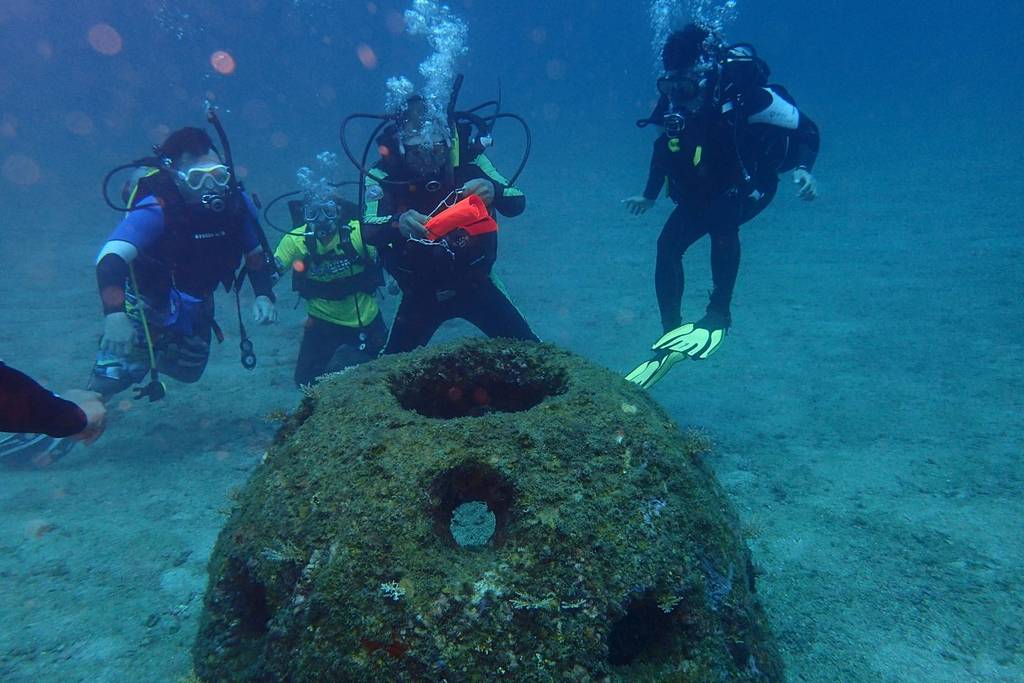
The Sarawak Reef Ball Project has now been fully completed (Phase 1: 2018–2021 and Phase 2: 2022–2025), with more than 21,800 artificial reef units deployed along the state’s coastline, establishing it as the “World’s Longest Reef Ball Barrier Reef” spanning 746 km. Significant impacts include marine ecosystem restoration, increased fish stocks, habitat protection, and international recognition.
Although feedback indicates that fish stocks in reef ball installation areas have increased by 20–30% within 3 to 5 years after deployment, this needs to be reinforced with robust statistics: are coastal fishermen reporting more consistent catches compared to previously?
This initiative clearly demonstrates the government’s commitment to sustainability. However, its actual effectiveness depends on how well these policies are translated into action on the ground.
Reports indicate that overfishing and coastal pollution continue to occur.
In 2025, the Malaysian Maritime Enforcement Agency conducted 11,938 inspections in Sarawak waters, recording 81 arrests involving 353 individuals for various maritime offenses.
The most frequent violations involved breaches of the Merchant Shipping Ordinance 1952, alongside cases of unlicensed fishing and the use of illegal equipment.
In Malaysia, there is no universally designated “fishing season”; however, the Department of Fisheries Malaysia outlines specific regulations through the Fisheries Act 1985 (and its 2025 amendments), which establish designated zones, methods, and periods for fishing activities.
These regulations include prohibitions on the use of trawl nets in coastal zones, permit requirements, and controls on certain species.
Malaysia does not set general closed fishing seasons but regulates fisheries through zoning, fishing methods, and special permits.
In Sarawak, the effectiveness of these policies depends on enforcement and coastal community awareness. Without strict compliance, efforts toward sustainable marine resource management will continue to face challenges.
Several enforcement cases in Sarawak and Malaysia illustrate how illegal fishing activities and legal violations can undermine the sustainable development of marine resources.
Notable cases include the interception of foreign fishing vessels, the use of trawl nets in prohibited zones, and shipping violations that damage marine ecosystems.
Despite educational programs, awareness levels among coastal communities remain low. Many small-scale fishermen rely on traditional methods without understanding the long-term impacts on fish stocks.
A lack of modern infrastructure—such as jetties, cold storage facilities, and distribution centres- results in suboptimal utilization of catches, further reducing Sarawak’s competitiveness compared to other states.
To address these challenges, several approaches should be implemented:
1. Strengthening Enforcement: Marine protection laws must be monitored more rigorously, including the use of satellite technology and drones to detect illegal activities.
2. Enhancing Community Awareness: Educational programs need to be more inclusive, engaging coastal communities as partners rather than mere recipients of directives.
3. Technology-Based Aquaculture Development: Promoting modern, technology-driven aquaculture can reduce pressure on wild fish stocks.
4. Inter-Agency Collaboration: Agencies such as SFC, the Department of Fisheries, fishing communities, and enforcement bodies like the Malaysian Maritime Enforcement Agency should adopt a co-management model.
5. Global Integration: Most importantly, this model must be integrated with the global Sustainable Development Goals (SDGs) agenda to secure international funding and expertise.
Countries such as Iceland, Norway, the Philippines, and Australia demonstrate that strict policies, effective enforcement, and community involvement can significantly improve fish stocks and biodiversity.
– Iceland implements responsible fisheries management through collaboration among the government, industry, and research institutions. As a result, fish stocks remain stable, and the fisheries sector has become a pillar of the national economy.
– Norway employs an ecosystem-based approach and technologies such as machine vision to identify species and monitor catches. This policy has successfully maintained sustainable fish stocks in the Barents Sea.
– Philippines: Case studies in Binaliw and Malabrigo show that Marine Protected Areas (MPAs) have increased catches for small-scale fishermen and restored biodiversity.
– Australia (Great Barrier Reef) has implemented the Reef 2050 Long-Term Sustainability Plan with investments exceeding RM4 billion since 2015. This policy has successfully reduced water pollution and enhanced the resilience of coral reef ecosystems.
Sarawak’s sustainable marine management requires stronger enforcement, community engagement, and infrastructure. While Blue Economy policies and Reef Ball projects show promise, long-term success depends on integrated co-management, technological adoption, and alignment with global sustainability goals to protect vital marine ecosystems.
References
Department of Fisheries Malaysia. (n.d.). Fisheries Statistics I. Department of Fisheries Malaysia. Retrieved April 12, 2026, from https://www.dof.gov.my/sumber/perangkaan-perikanan-i/
Lembaga Kemajuan Ikan Malaysia. (n.d.). Annual Report. LKIM. Retrieved April 12, 2026, from https://www.lkim.gov.my/laporan-tahunan/
Jabatan Perikanan Laut Sarawak. (n.d.). Sarawak Marine Fisheries Department. Retrieved April 12, 2026, from https://www.govserv.org/MY/Kuching/169805160622876/Jabatan-Perikanan-Laut-Sarawak
Government of Malaysia. (n.d.). Fish Landings Data Catalogue. Data.gov.my. Retrieved April 12, 2026, from https://data.gov.my/ms-MY/data-catalogue/fish_landings
Utusan Borneo. (2025, June 26). Reef ball artificial reef deployment method shows positive effects. Utusan Borneo. https://www.utusanborneo.com.my/2025/06/26/kaedah-penanaman-tukun-reef-ball-menunjukkan-kesan-positif
Jiwa Bakti. (n.d.). 21,800 reef ball artificial reefs deployed. Jiwa Bakti. Retrieved April 12, 2026, from https://jiwabakti.com.my/21800-tukun-reef-ball-dilabuh/
Premier of Sarawak. (n.d.). News view: Reef ball project. Premier Sarawak. Retrieved April 12, 2026, from https://premier.sarawak.gov.my/web/subpage/news_view/5503
DayakDaily. (n.d.). Sarawak in final stages of deploying 300 artificial reefs under reef ball project phase 2. DayakDaily. Retrieved April 12, 2026, from https://dayakdaily.com/sarawak-in-final-stages-of-deploying-300-artificial-reefs-under-reef-ball-project-phase-2/
Rakan Sarawak. (2024, August 30). A milestone in marine biodiversity conservation. Rakan Sarawak. https://www.rakansarawak.com/v3/2024/08/30/a-milestone-in-marine-biodiversity-conservation/
Sarawak Forestry Corporation. (2025, n.d.). Visit to reef ball project monitoring activities. Facebook. Retrieved April 12, 2026, from https://www.facebook.com/sfcsarawak/posts/lawatan-ke-aktiviti-pemantauan-reef-ball-projek-rakyat-sarawak-forestry-corporat/679365647560769/