
Sarawak stands at the precipice of a transformative economic era, driven by aggressive industrialization, a booming green energy sector, and a strategic push toward high-income status.
For institutional investors and private equity firms evaluating Southeast Asian infrastructure, the proposed establishment of Air Borneo presents a compelling, albeit complex, value proposition.
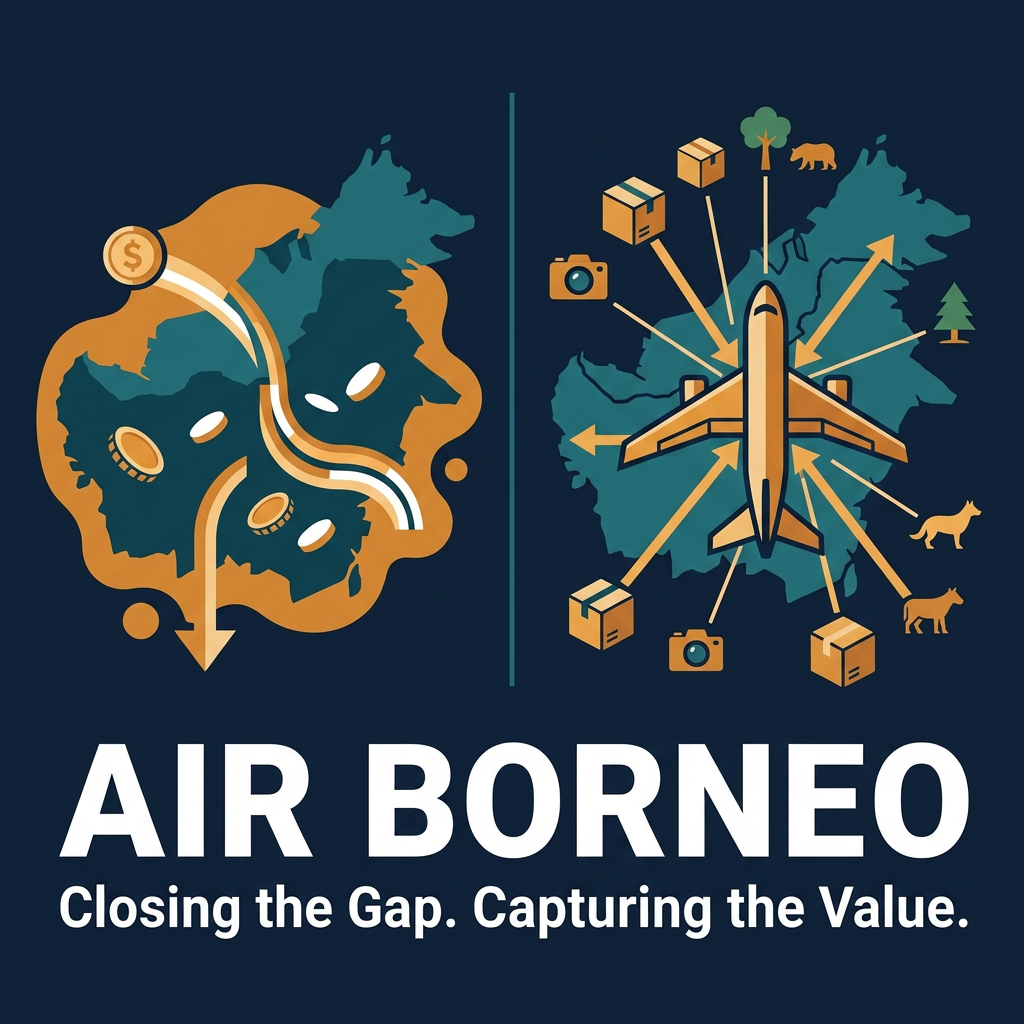
Air Borneo is not merely a regional carrier; it is a strategic economic multiplier designed to unlock the latent potential of Sarawak’s vast interior.
By analysing the macroeconomic indicators, regulatory frameworks, and operational realities, investors can understand how this aviation initiative transitions from a social obligation to a sustainable, high-yield asset.
The strategic rationale for Air Borneo is deeply rooted in the vision of the state leadership.
Premier Sarawak Datuk Patinggi Tan Sri (Dr) Abang Haji Abdul Rahman Zohari bin Tun Datuk Abang Haji Openg has consistently articulated that connectivity is the bedrock of inclusive economic growth.
Highlighting the necessity of the initiative, the Premier has emphasized that Sarawak must have its own dedicated airline to connect rural areas effectively, ensuring that no community is left behind in the state’s march toward a developed, high-income economy by 2030.
He aspires to transform the state’s geographical vastness from a logistical burden into a networked advantage, integrating remote populations into the mainstream digital and physical economy.
This top-down political will provides a stable regulatory environment and guarantees state backing, which significantly de-risks the initial capital expenditure for early investors.
To comprehend the need for the establishment of Air Borneo, one must analyse the geographical and economic inefficiencies of the current paradigm.
Sarawak spans 124,450 square kilometres, making it the largest state in Malaysia.
Approximately 45% of its population resides in rural or semi-rural areas, heavily reliant on the federal Rural Air Services.
While these services fulfil a critical social mandate, they operate under a subsidized model that lacks commercial agility, resulting in suboptimal fleet utilization and limited economic spillover.
The establishment of Air Borneo addresses this structural loophole by transitioning rural connectivity from a purely subsidized welfare model to a commercially viable, state-backed enterprise.
It answers the critical need for a localized aviation entity that can dynamically adjust capacity, integrate cargo logistics, and stimulate local tourism, thereby capturing economic value that currently leaks out of the state ecosystem.
To achieve the performance phase and maximize investor returns, the corporate strategy of Air Borneo must be underpinned by robust strategic development communication.
The organization must align messaging and channels with overarching development goals to ensure all communication activities directly support priority outcomes and resource allocation, thereby signalling stability to the market.
Furthermore, it must foster inclusive stakeholder engagement and co-creation by establishing two-way dialogue that leverages community insights, builds partnerships, and drives collective ownership among rural stakeholders.
The strategy must also catalyse sustainable behaviour and social change through evidence-based, culturally resonant messaging that addresses barriers and promotes actionable practices, such as shifting from subsistence farming to high-value commercial agriculture supported by air cargo.
Additionally, the framework must strengthen institutional and community capacity by systematically sharing knowledge, delivering targeted training, and improving access to actionable resources for local suppliers.
Crucially, the airline must build trust, transparency, and accountability through consistent, ethical communication practices, clear reporting, and responsive feedback mechanisms to maintain its social license to operate.
Finally, it must enable continuous improvement via data-driven evaluation by embedding monitoring, learning, and adaptive management into all communication strategies and campaigns, ensuring agility in a volatile aviation market.
A comparative analysis with other regional and international aviation models provides critical insights for risk mitigation and yield optimization.
In Peninsular Malaysia, regional carriers like Firefly have struggled with yield management due to intense competition from low-cost carriers and high airport taxes at secondary hubs.
Internationally, Wings Air in Indonesia offers a highly successful blueprint.
Utilizing a modern fleet of ATR turboprops, Wings Air dominates the remote archipelago routes by aggressively integrating passenger and cargo networks, achieving profitability through high asset utilization.
Conversely, the recent administration challenges faced by Rex Airlines in Australia highlight the dangers of over-reliance on regional subsidies without diversified revenue streams.
Air Borneo must synthesize the social mandate of MASwings with the commercial agility and cargo integration of Wings Air, while avoiding the capital structure pitfalls that plagued regional carriers in mature markets.
Despite the strong strategic premise, a critically strong analysis must pinpoint the gaps and loopholes in the current regional aviation model that Air Borneo must navigate.
The most significant financial loophole is the inherent unprofitability of short-haul STOLport operations when reliant solely on passenger yields.
The cost per available seat kilometre on rural routes often exceeds the revenue generated, creating a perpetual cash burn if not managed through innovative ancillary revenue streams.
Another critical gap is the severe bottleneck in Maintenance, Repair, and Overhaul capabilities within Borneo.
Currently, aircraft servicing requires ferrying planes to Peninsular Malaysia or Singapore, leading to extended ground times and compromised fleet availability.
Furthermore, there is a glaring digital infrastructure gap.
While urban demographics seamlessly utilize digital booking engines, rural populations face significant barriers to digital ticketing, limiting load factors and creating an artificial ceiling on revenue growth.
Acknowledging these structural vulnerabilities is essential for accurate financial modelling and risk assessment.
Addressing these challenges requires practical, commercially viable solutions.
To overcome the rural yield deficit, Air Borneo must pivot from a passenger-centric model to a hybrid passenger-and-cargo operation.
By utilizing the belly space of turboprop aircraft for high-value, time-sensitive agricultural exports, such as premium Sarawak pepper, swiftlets’ nests, and tropical horticulture, the airline can cross-subsidize passenger routes.
To resolve the digital divide, the airline should deploy physical, agent-assisted digital kiosks in rural community halls, integrating local micro-entrepreneurs into its distribution network.
To bridge the MRO gap, Air Borneo must invest in localized, specialized maintenance facilities at its primary hubs in Kuching and Miri, partnering with global aerospace firms for technology transfer.
This not only reduces aircraft downtime but also creates a new, high-margin revenue stream by offering MRO services to third-party regional operators.
The strategic positioning of Air Borneo is deeply intertwined with both federal and state government policies, providing a favourable tailwind for investors.
At the federal level, the initiative aligns seamlessly with the Malaysia MADANI framework, which emphasizes sustainability, compassion, and inclusive economic growth.
It also supports the Malaysia Aviation Blueprint 2021 to 2030, which advocates for the rationalization of rural air services and the enhancement of regional connectivity.
At the state level, Air Borneo is the operational engine for the Sarawak Maju 2030 blueprint.
This policy framework prioritizes the decentralization of economic growth, the empowerment of rural economies, and the development of a high-income, knowledge-based society.
By aligning its corporate objectives with these policy directives, Air Borneo ensures continuous government support, favourable regulatory treatment, and access to state-backed infrastructure development funds.
For the modern investor, Environmental, Social, and Governance compliance is not optional; it is a prerequisite for capital allocation.
Air Borneo integrates the core values of resilience, authenticity, kindness, advocacy, and nurturing directly into its ESG framework, aligning with the United Nations Sustainable Development Goals.
Resilience is engineered into the operational model through the adoption of fuel-efficient turboprop fleets and the exploration of Sustainable Aviation Fuel, directly supporting SDG 13 on Climate Action by minimizing the carbon footprint of regional flights.
Authenticity is maintained through rigorous, transparent ESG reporting and ethical procurement practices, ensuring that stakeholders have a clear, unvarnished view of the airline’s environmental and social impact, which supports SDG 16 on Peace, Justice, and Strong Institutions.
Kindness is operationalized through the provision of subsidized, accessible fares for rural communities and the design of customer-centric services that respect local cultural nuances, fostering social cohesion and supporting SDG 11 on Sustainable Cities and Communities.
Advocacy is demonstrated by the airline’s active role in lobbying for improved rural aviation infrastructure and policies that protect the economic interests of interior communities.
Finally, nurturing is reflected in the airline’s commitment to human capital development.
By establishing local cadet pilot programs, engineering apprenticeships, and sourcing supplies from rural micro-enterprises, Air Borneo nurtures the next generation of Sarawakian talent, directly contributing to SDG 8 on Decent Work and Economic Growth and SDG 9 on Industry, Innovation, and Infrastructure.
Recent data underscores the urgency and potential of this investment.
According to the Department of Statistics Malaysia, Sarawak’s gross domestic product grew by 5.5 percent in 2023, driven by strong performances in the services and manufacturing sectors.
The state’s tourism target of attracting five million tourists and generating RM 5 billion in revenue by 2026 requires a robust aviation network to distribute visitor traffic beyond the primary urban centres.
Furthermore, the Ministry of Transport Malaysia reports that the annual subsidy for Rural Air Services exceeds RM 150 million.
By optimizing these routes through commercial best practices, Air Borneo has the potential to significantly reduce the fiscal burden on the government while simultaneously increasing the economic output generated per ringgit of subsidy.
International studies by the World Bank indicate that every one percent increase in air connectivity in emerging markets can yield a 0.04 percent increase in GDP growth, highlighting the profound macroeconomic multiplier effect of regional aviation.
In conclusion, Air Borneo represents a sophisticated intersection of social imperative and commercial opportunity.
For investors, it offers a chance to capitalize on the untapped economic potential of Sarawak’s interior while contributing to a transformative national agenda.
The challenges of rural yield management, MRO bottlenecks, and digital exclusion are significant, but they are not insurmountable.
Through the implementation of hybrid cargo models, localized maintenance investments, and community-integrated distribution networks, these gaps can be converted into competitive advantages.
Backed by the unwavering vision of the state leadership, aligned with national and state policy frameworks, and structured around rigorous ESG principles, Air Borneo is poised to redefine regional aviation in Southeast Asia.
It is an investment not just in aircraft and routes, but in the enduring economic resilience and inclusive prosperity of Sarawak.
References
Department of Statistics Malaysia. (2024). Gross domestic product, fourth quarter and year 2023. https://www.dosm.gov.my
Economic Planning Unit, Prime Minister’s Department. (2022). Malaysia MADANI: A framework for sustainable and inclusive development. Putrajaya: Government of Malaysia.
International Air Transport Association. (2023). Regional aviation in Southeast Asia: Market dynamics and sustainability pathways. IATA Publishing.
Ministry of Transport Malaysia. (2023). Malaysia aviation blueprint 2021-2030: Annual progress report. Putrajaya: MOT.
Sarawak Government. (2022). Sarawak Maju 2030: A shared vision for a prosperous, sustainable, and united Sarawak. Kuching: State Planning Unit.
The Borneo Post. (2023, November 10). Premier stresses rural connectivity as key to high-income status. The Borneo Post. https://www.theborneopost.com
United Nations Development Programme. (2023). Financing the SDGs in Malaysia: Progress, challenges, and the role of private investment. UNDP Malaysia.
World Bank Group. (2023). The economic impact of air connectivity in emerging Asia: A macroeconomic analysis. Washington, DC: World Bank.