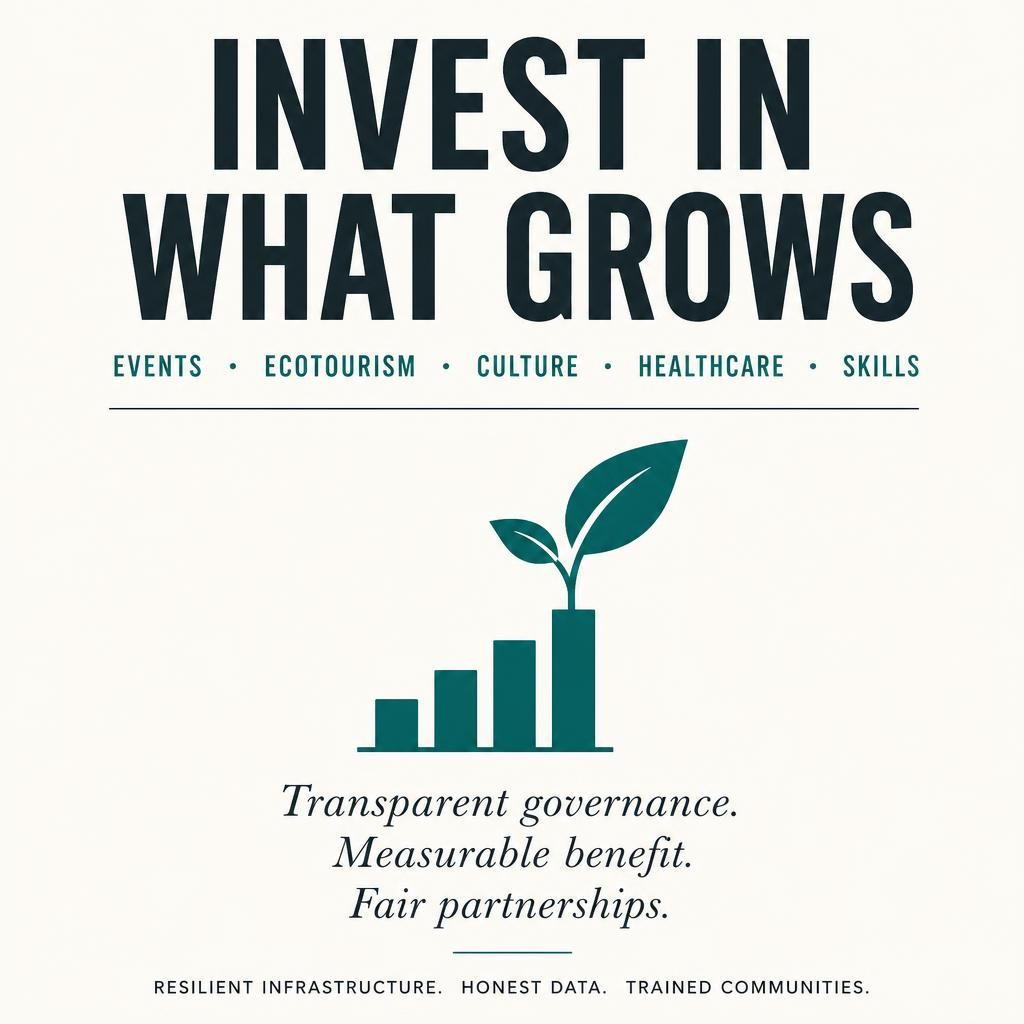

- Visitor receipts and event demand show Sarawak’s tourism growth is real, but delivery, transparency and community benefit determine durable returns.
- Business events exceed targets, creating high-value demand for quality venues, five-star rooms, event services and hospitality training.
- Ecotourism differentiates Sarawak when communities hold real decisions, gain training and show measurable conservation and income benefits.
- Creative and health tourism offer specialist openings, requiring fair pricing, design support, ethical care and transparent patient services.
- Workforce shortages and infrastructure gaps are critical constraints; training, housing, productivity technology and honest project timelines are practical responses.
Sarawak tourism has moved decisively from recovery into a growth phase that offers genuine business and investment opportunities across travel, hospitality, events and the creative economy. The state welcomed 3.52 million visitors between January and September 2026 and generated RM9.0 billion in receipts, an average of more than RM1 billion per month. This builds on 4.97 million visitors and RM12.67 billion in receipts for the whole of 2025, the state’s highest tourism receipts on record. These are not abstract statistics. They represent spending in hotels, restaurants, transport, homestays, craft workshops and cultural venues, and they signal a market that is expanding rather than merely returning to old levels.
The wider national picture reinforces the opportunity. Malaysia recorded 28.8 million international arrivals from January to August 2026, an increase of 1.8 per cent over the same period in 2025. Sarawak’s share of national arrivals remains modest, but its growth is steady and its product is distinctive. For investors, that combination matters. A destination that is not yet saturated but is building visitor numbers, connectivity and event capacity offers room to enter early and grow with the market.
The global backdrop requires realism. International tourism growth slowed in 2026, with the World Trade Organization cutting its forecast for the year to just 0.2 per cent, down from an earlier estimate of 3.9 per cent, largely because of geopolitical tensions and higher fuel costs. At the same time, the forecast for 2027 has been raised to 9.2 per cent. The lesson for Sarawak is that global demand remains fundamentally strong, but destinations that rely on broad, undifferentiated tourism will face sharper competition. Sarawak’s opportunity lies in selling what cannot be easily replicated elsewhere: rainforests, rivers, caves, living culture and community hospitality.
Business Events and MICE: High-Value, Low-Volume Demand
Business events are one of the clearest commercial openings in Sarawak. Business Events Sarawak secured 153 events for 2026, beating its target of 140, with a projected economic impact of RM641.5 million, 66,625 delegates and RM33.6 million in tax revenue, exceeding annual targets by 59 per cent, 35 per cent and 39 per cent respectively. Separately, 171 business events were scheduled for 2026 with a projected impact of RM731.2 million, and by reporting time 125 events had hosted 52,332 delegates and delivered RM470.2 million in impact. These are high-value visitors who spend across hotels, food, transport and leisure, and who often extend their stays for heritage and nature visits.
The PATA Travel Mart 2026 in Kuching drew over 1,100 delegates from 48 countries and destinations, including 221 international buyers from 29 source markets and over 365 sellers. That kind of trade event does more than fill hotel rooms for a week. It exposes international buyers to Sarawak’s product and builds the trade relationships that generate future bookings. For hotel developers, venue operators and service providers, the message is straightforward: Sarawak needs more quality venues and five-star rooms to capture the events it is already winning. Event pipelines must align with priority sectors and local skills, which means opportunities not only in construction but in event management, audio-visual production, hospitality training and delegate services.
Ecotourism and Community Tourism: The Strongest Differentiator
Ecotourism is Sarawak’s strongest differentiator in a crowded region. Rainforests, rivers, caves and wildlife offer experiences that cannot be found in competing destinations, and community-based tourism can spread income beyond the cities. The state is developing projects such as the Gunung Lesong Eco-Tourism Complex and leveraging the Sarawak Delta Geopark to ensure that tourism benefits local communities and conserves natural capital. These are investable propositions, but they require a particular kind of investor: one who understands that conservation and commercial returns are not opposites.
Community tourism works best when residents control genuine decisions and when homestays receive training in hospitality, safety, digital marketing and finance. Benefits must be visible through jobs, contracts and local procurement. Without community trust, ecotourism loses its social licence. For operators and investors, this creates opportunities in training, certification, small-scale infrastructure and supply-chain development. It also creates a market for responsible tourism brands that can demonstrate measurable community benefit rather than simply claiming it.
Rural tourism requires basic infrastructure before expensive branding. Roads, power, water, clinics and reliable mobile coverage are non-negotiable. Public investment should follow long-term local development plans, but private capital can play a role in accommodation, guiding services, transport and digital connectivity where the public framework is in place. The risk of greenwashing is real, and Sarawak should protect its brand through independent checks and honest public evidence. Investors who build genuine sustainability credentials into their projects will find that trust is now a competitive advantage.
The Creative Industry: Craft, Performance and Digital Content
The creative industry is recognised as a key driver of Sarawak’s high-income economy. It adds depth to the visitor economy through music, dance, theatre, craft and food, and it gives Sarawak a distinctive identity that supports marketing at lower cost than mass advertising. The commercial signals are becoming clearer. Sarawak’s craft industry generated RM5.9 million in sales through promotional events in 2025, with RM2.07 million from events outside Sarawak and RM3.83 million within the state. That is a small base, but it demonstrates demand and provides a foundation for scaling through better market access, fair pricing and design support.
Kuching has held UNESCO Creative City of Gastronomy status since November 2021, and in 2026 twenty-five Sarawak restaurants received the TOP 25 Restaurants Award. Food tourism connects local farms, markets, cooks and cultural stories, and it can support many rural suppliers and small restaurants. The opportunity here is not simply more restaurants. It is in food trails, culinary training, hygiene standards, consistent quality and festival programming that avoids waste and protects local character.
Cultural diversity is a strategic asset. Sarawak has many local ethnic communities with distinct crafts, music and stories, and visitors increasingly seek living culture rather than staged displays. Craft producers need market access, fair pricing and design support, and traditional skills can be documented and passed to younger artisans. Digital sales can widen global reach without losing cultural meaning. The planned Performing Arts Centre at the Old DUN Building, scheduled for completion in 2027, signals the state’s commitment to cultural infrastructure and creates opportunities for promoters, production companies and hospitality businesses around the venue.
The digital content sector adds another layer. Malaysia’s digital content industry, including animation, video games and virtual reality, is growing, and Sarawak is positioning itself to capture a share of that growth. The state’s creative industry coordination committee and industry directory are steps towards structuring the sector, but private investment in studios, training and distribution will determine whether Sarawak builds a durable content cluster or remains a consumer of imported content.
Health and Medical Tourism: Specialist Care with Transparent Pricing
Healthcare travel is a growing segment with clear investment implications. Sarawak attracted 104,323 healthcare travellers in 2025, up 35.8 per cent from 76,796, and recorded 48,480 travellers and RM109.9 million in revenue in the first half of 2026, a 21 per cent increase over the same period in 2025. Medical tourism needs strong hospitals, ethical pricing and clear patient support, and visitors often bring families and stay longer, which helps hotels and transport. Quality and safety must never be compromised for volume.
The opportunity for investors is in specialist care, transparent packages and patient services rather than in competing on price for routine procedures. Sarawak should target areas where it can build genuine expertise, and it should ensure that the supporting infrastructure, from accommodation to transport, meets the expectations of healthcare travellers and their families. This is a segment where reputation matters enormously, and where a single poor experience can damage a destination’s credibility. For operators who get the basics right, the rewards are high-value, resilient demand.
Cruise, Connectivity and Access
Air connectivity remains central to Sarawak’s tourism ambition. New routes can open markets, but they must be supported by marketing and ground services, and airlines need reliable demand and fair airport costs. The upcoming operation of AirBorneo is poised to be a game-changer, with plans to align routes with tourism target markets. For investors, improved connectivity reduces the risk of hospitality and attraction projects and expands the catchment for events, medical tourism and ecotourism.
Cruise tourism offers a diversification opportunity. Kuching welcomed the premium Villa Vie Odyssey with 282 passengers in May 2026, and Island Sky followed with 118 international passengers in August. Cruise growth should complement, not overwhelm, existing destinations, and ports must offer smooth clearance and attractive shore experiences. Environmental rules must protect rivers and fragile coastal communities, and local suppliers need advance schedules and fair contracts. The opportunity is in shore excursions, provisioning, port services and hospitality for crew and passengers, but it depends on reliable scheduling and disciplined environmental management.
Digitalisation, Marketing and Data
Sarawak Tourism Board recorded over 644 million digital impressions in 2025 and reached over 400 million by September 2026. Digital tools can improve bookings, visitor flows and service quality, but small operators need simple systems and affordable training. Data must guide marketing, transport planning and site management, and digital inclusion should reach remote homestays and craft producers.
Marketing must move beyond pretty images. Visitors need clear information on access, prices, safety and local rules, and digital platforms should reflect real capacity and protect fragile sites. Honest promotion builds trust and reduces disappointment. For technology providers and training organisations, Sarawak offers a growing market for booking systems, digital payment solutions, data analytics and content production. The challenge is not demand for these services but affordability and adoption among small operators, which creates scope for subsidised or shared-service models.
Infrastructure, Investment and Delivery Discipline
Visitor growth must be matched by better roads, airports, jetties and facilities. Congestion can damage the visitor experience, and planning should link tourism sites with health, waste and water services. Private investment is essential for quality hotels, attractions and transport, but investors need long-term stable rules and credible visitor demand. Public agencies should focus on enabling local infrastructure and skills, and partnerships must share risks and benefits fairly with communities.
The 2027 state budget gives tourism, heritage and creative work a stronger platform, but funding must support projects, programmes and grassroots initiatives. Small local operators need predictable grants and fair access, and accountability will protect public trust and private confidence. Tourism grants must be simple, fair and fast, with clear criteria and honest public reporting. Project delivery matters more than announcements. Delays raise costs and weaken confidence, and tourism projects should publish clear timelines, budgets and outcomes. Investors should look for projects with credible delivery partners and transparent governance, because the state’s reputation for execution will shape the risk premium attached to Sarawak tourism assets. In the first ten months of 2026, the Ministry of Tourism, Creative Industry and Performing Arts approved RM46.43 million to support 346 events and programmes, covering tourism activities, festivals, heritage and creative industry projects, which signals both public commitment and a pipeline of event-based opportunities for private suppliers.
Workforce and Skills: The Critical Constraint
The most serious constraint on Sarawak’s tourism growth is not demand but people. The tourism sector will need 17,500 additional employees every year to sustain growth, and even if all unemployed Sarawakians joined the sector, the labour market would run dry within a few years. Hospitality workers have been leaving for Kalimantan, where salaries are reported to be two or three times higher than in Sarawak. This is a structural challenge that cannot be solved by marketing alone.
For investors, workforce availability affects every business case. Hotels, restaurants, event venues and tour operators all depend on trained staff, and the shortage drives up wages and limits expansion. The opportunity lies in training, workforce housing, recruitment services and productivity-enhancing technology. Community tourism programmes that train homestay hosts in hospitality, safety, digital marketing and finance are part of the solution, but they need scale. Employers that invest in training and career pathways will be better placed to retain staff and maintain service quality.
Managing Risks: Climate, Over-Tourism and Reputation
Climate resilience is now a practical tourism requirement. Coastal, riverine and nature-based sites face rising risks, and operators need early warning systems, safe routes and clear emergency plans. Communities must help design adaptation that fits local conditions. Investors in ecotourism and coastal assets should build resilience into their capital plans rather than treating it as an afterthought.
Over-tourism is another risk. Visitor growth must be managed so that it does not damage the assets that attract visitors in the first place. Higher spending per visitor can reduce pressure on fragile sites, and Sarawak should target longer stays and premium experiences rather than raw arrival numbers alone. Tourism success should be measured by income, jobs and conservation outcomes, not just arrival counts, and regular surveys should track spending, satisfaction and local sentiment.
Reputation risk is closely linked to delivery quality. Visitors remember long delays, dirty facilities and poor communication, and online reviews can damage a destination quickly. Training and maintenance are as important as advertising. Transparent reporting will help the public judge progress and will give investors confidence that promises are being kept. Event-led demand is already proven: the Rainforest World Music Festival 2026 attracted 22,000 attendees and generated RM19.91 million in economic spin-offs, while Sarawak’s 20 active museums, forts and galleries recorded 412,114 visitors from January to September 2026, an 11.16 per cent year-on-year increase. These figures show that cultural and heritage assets can generate repeatable commercial returns when they are well managed and honestly marketed.
A Durable Development Engine
Sarawak can turn tourism into a durable development engine by 2028. The state has nature, culture, talent and growing connectivity. It has a business events sector that is winning international conferences, an ecotourism product that is difficult to replicate, a creative industry with deep cultural roots and a healthcare travel segment that is growing rapidly. It also has a clear policy framework that treats tourism as a core economic sector and links it to heritage, creative work and rural development. The Sarawak-Malaysia My Second Home programme approved 287 applications involving 490 participants from 31 countries between January and September 2026, with China accounting for 118 approvals or 41.1 per cent, which adds a long-stay, high-value segment to the market.
Success will require discipline, honest data and community trust. The next three years will test delivery and accountability. For businesses and investors, the opportunity is not in waiting for perfection. It is in entering segments where demand is proven, where public policy is supportive and where private capital can raise quality and capacity. Hotels and venues, ecotourism operations, craft and food enterprises, digital services, healthcare support services and workforce training all offer viable entry points. Sarawak’s tourism story is stronger when residents see direct benefits, and inclusive growth will protect the state’s reputation and social stability. With the right partnerships and a realistic approach to risk, Sarawak can compete confidently within ASEAN and build an industry that lasts beyond the next event cycle.
References
Borneo Post Online. (2026, October 20). Sarawak welcomes 3.52mln visitors up to September, Asean remains top market. https://www.theborneopost.com/2026/10/20/sarawak-welcomes-3-52mln-visitors-up-to-september-asean-remains-top-market/
Borneo Post Online. (2026, October 12). Medical tourism revenue hits RM109.9 mln in six months. https://www.theborneopost.com/2026/10/12/medical-tourism-revenue-hits-rm109-9-mln-in-six-months/
Borneo Post Online. (2026, August 15). Uggah: Take Sarawak handicrafts from ‘ruai’ to the world. https://www.theborneopost.com/2026/08/15/uggah-take-sarawak-handicrafts-from-ruai-to-the-world/
Dayak Daily. (2026, October 20). S’wak business events projected to generate RM641.5 mln from 153 events. https://dayakdaily.com/swak-business-events-projected-to-generate-rm641-5-mln-from-153-events/
Pacific Asia Travel Association. (2026, June 29). PATA mid-year update: The numbers behind Asia-Pacific tourism growth. https://www.pata.org/press-release/pata-mid-year-updates-the-numbers-behind-asia-pacific-tourism-growth-china-volume-vietnam-velocity
Pacific Asia Travel Association. (2026, August 18). PATA Travel Mart 2026 brings Asia Pacific tourism community together in Sarawak, Malaysia. https://www.pata.org/press-release/pata-travel-mart-2026-brings-asia-pacific-tourism-community-together-in-sarawak-malaysia
Sarawak Tribune. (2026, October 20). Sarawak business events exceed RM641.5 million target. https://www.sarawaktribune.com/sarawak-business-events-exceed-rm641-5-million-target/
Sarawak Tribune. (2026, October 20). Visitors to museums, forts and galleries up by 11.16 pct. https://www.sarawaktribune.com/visitors-to-museums-forts-and-galleries-up-by-11-16-pct/
Sarawak Tribune. (2026, October 20). Rainforest festival generates RM19.91 mln in economic spin-offs. https://www.sarawaktribune.com/rainforest-festival-generates-rm19-91-mln-in-economic-spin-offs/
Unit Komunikasi Awam Sarawak (UKAS). (2026). Sarawak catat rekod 4.97 juta pelawat, hasil pelancongan cecah RM12.6 bilion bagi tahun 2025. https://ukas.sarawak.gov.my/web/subpage/news_view/32298
Unit Komunikasi Awam Sarawak (UKAS). (2026). Pelancongan kesihatan Sarawak jana RM109.9 juta dalam enam bulan pertama 2026. https://ukas.sarawak.gov.my/web/subpage/news_view/32386
Unit Komunikasi Awam Sarawak (UKAS). (2026). Kraf Sarawak disasar tembusi pasaran dunia. https://ukas.sarawak.gov.my/web/subpage/news_view/32347
Unit Komunikasi Awam Sarawak (UKAS). (2026). Sarawak catat 6.83 juta carian penerbangan dari seluruh dunia. https://ukas.sarawak.gov.my/web/subpage/news_view/32348
TVS Sarawak. (2026, October 20). DUN Sarawak: SMM2H lulus 287 permohonan libatkan 490 peserta. https://www.tvsarawak.my/2026/10/20/dun-sarawak-smm2h-lulus-287-permohonan-libatkan-490-peserta/