
Backed by the Post-COVID Development Strategy (PCDS) 2030, Sarawak is not merely participating in the sustainable materials revolution; we are positioned to lead it.
We invite FDI and DDI partners to capitalize on a projected global bamboo market set to explode from USD70.66 billion in 2025 to over USD20 billion by 2034 in select segments, leveraging Sarawak’s strategic advantages in land, policy, and renewable energy.
The Unassailable Investment: Why Bamboo, Why Now?
The world is desperately shifting from finite, fossil-based materials to renewable biological alternatives.
Bamboo dubbed “green steel” is at the apex of this transition, with the global bamboo market experiencing a robust compound annual growth rate of 5.82 percent driven by soaring demand in construction, textiles, and bioenergy.
China, the undisputed global leader, has achieved an annual bamboo output value exceeding ¥520 billion, equivalent to USD74.4 billion, offering over 15,000 products and employing 29 million people across the industrial chain, and its 15th Five-Year Plan, spanning 2026 to 2030, aggressively expands circular economy clusters.
The engineered bamboo segment presents particularly compelling figures, with the global engineered wood market valued at USD25.3 billion in 2024 and projected to reach USD31.2 billion by 2030 at a compound annual growth rate of 3.6 percent, as this material possesses tensile strength comparable to steel.
In the textile sector, global bamboo textile output surpassed 1.8 million tons in 2024, with Asia capturing 90 percent of all bamboo fibre production.
Well-managed bamboo plantations sequester carbon at rates exceeding fast-growing timber, offering dual revenue streams from product sales and carbon offsets.
The global export value of bamboo products hit USD68 billion in 2022 and is growing at 4 percent annually, meaning that early movers in resource-rich, politically stable ASEAN hubs like Sarawak will capture premium market share before the supply chain saturates.
Sarawak’s Competitive Advantage
While China and India dominate volume, Sarawak offers a premium, traceable, and sustainable alternative for Western and Asian buyers seeking to de-risk supply chains away from single-nation dependency.
China’s bamboo industry generates USD74.4 billion in annual output value from 8 million hectares of planted area employing 29 million people, while India produces approximately USD4.2 billion from roughly 1.6 million hectares.
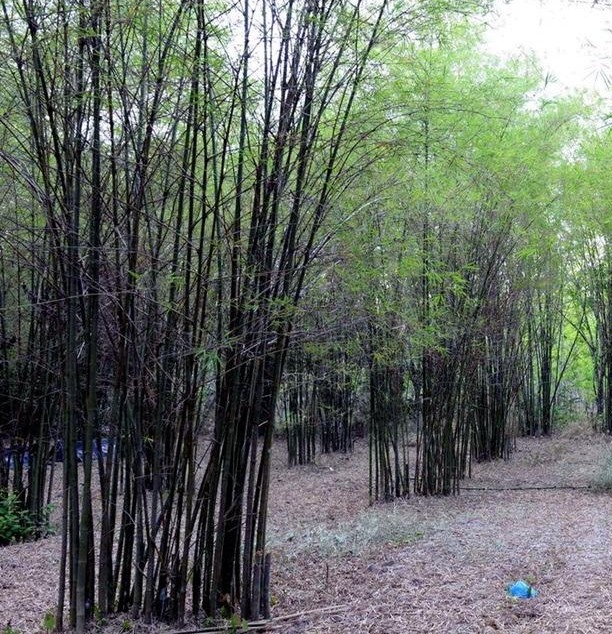
By contrast, Sarawak’s current contribution to GDP from bamboo is negligible, a gap we view as a greenfield profit centre with 4,900 hectares already planted as of April 2025 and a state target of 30,000 hectares by 2030.
While employment figures are currently nascent, the sector is projected to generate over 10,000 direct jobs.
Sarawak’s key advantage lies not in volume but in ESG premium positioning, full supply chain traceability, and integration with a renewable energy grid.
The Sarawak edge is built on three foundational pillars.
First, land availability:
Sarawak holds 45 percent of Malaysia’s total bamboo plantations, which nationally stand at 4,000.87 hectares, and unlike Java or Southern China, Sarawak offers vast, contiguous, low-competition land, including degraded forest areas suitable for industrial clonal plantations.
Second, energy security:
Sarawak’s renewable hydroelectric grid, managed by Sarawak Energy Berhad, provides the lowest industrial power tariffs in Southeast Asia, which is crucial for energy-intensive processing such as laminating, carbonization, and biochar production.
Third, policy certainty:
PCDS 2030 explicitly mandates green economy diversification, and the Sarawak Timber Industry Development Corporation has signed strategic memoranda of understanding with partners, including Bintulu Port Holdings and Pertama Ferroalloys to develop 10,000 hectares specifically for commercial-scale bamboo.
Revenue Potential for Investors
The transition from raw material to high-value manufacturing defines the investment opportunity in Sarawak’s bamboo sector.
Under a raw culm scenario, a dedicated bamboo estate of 50,000 hectares would generate hundreds of millions of Ringgit annually in direct sales alone.
However, the value-added processing scenario offers substantially greater returns, as engineered bamboo flooring commands premium international prices ranging from USD50 to $120 per square meter, while bamboo biochar and wood pellets are in high global demand.
Sarawak’s wood pellet production grew 132 percent from 35,522 tons in 2022 to 81,800 tons in 2023, with Japan, France, and South Korea as the main importers, demonstrating the state’s capacity to scale up sustainable biomass production for export markets.
Furthermore, as global carbon markets mature through mechanisms such as the EU Emissions Trading System and CORSIA, Sarawak’s bamboo plantations can generate verified carbon credits, adding a recurring, non-cyclical revenue stream to the investment case.
In China, bamboo has lifted millions out of poverty, and for institutional investors, a bamboo project in Sarawak offers a shorter gestation period with harvest available in three to five years compared to fifteen or more years for timber, delivering an internal rate of return potential exceeding traditional pulp and paper projects, particularly when carbon credits are factored into the financial model.
De-Risking Your Investment
The Sarawak government has addressed historical bottlenecks, including fragmented supply chains and a lack of quality germplasm, head-on through concrete policy measures and infrastructure development.
The Sarawak Timber Industry Development Corporation has set a clear plantation target of 30,000 hectares by 2030, with 4,900 hectares already planted by 17 commercial companies and 200 community participants as of April 2025.
Public-private partnerships are actively operating through memoranda of understanding with Malaysian Community Care Foundation Resources Sdn Bhd, Bintulu Port Holdings Berhad, and Pertama Ferroalloys Sdn Bhd.
The state has produced the Engineered Wood Product Blueprint, mandating Industry 4.0 adoption, including automation and digital tracking to ensure global competitiveness, alongside active research and development collaborations with local and foreign research institutions to develop high-yield, disease-resistant Gigantochloa scortechinii clones suited for Sarawak’s specific microclimates.
Unlike Ethiopia or remote parts of India, Sarawak possesses deep-water ports at Bintulu, paved rural roads, and proximity to major Asian shipping lanes.
The state is ready for export.
The total area of bamboo plantations reported in the 2024 Global Bamboo Resource Survey included 2,164,379.91 hectares of naturally occurring bamboo managed by 64 holders and 202,207.68 hectares of intentionally planted bamboo managed by 379 holders, highlighting the diversity of management approaches and the importance of supporting both smallholder and commercial plantation models.
Sarawak’s strategy similarly embraces a pluralistic approach that accommodates community-based cultivation alongside commercial enterprises, creating a balanced and resilient supply chain.
Why Global Funds Are Prioritizing Sarawak Bamboo
For institutional investors bound by strict Environmental, Social, and Governance criteria, bamboo is the asset class that delivers on all three pillars without compromise.
On the environmental front, bamboo restores degraded land, prevents erosion, and sequesters carbon rapidly, and Sarawak’s strategy explicitly prohibits primary forest clearing for bamboo plantations.
On the social dimension, bamboo cultivation is labour-intensive, creating ethical jobs in rural Dayak communities while utilizing Native Customary Rights land via fair contract farming models that reduce rural-urban migration and preserve cultural heritage.
On governance, Sarawak offers a transparent regulatory environment where the Sarawak Sustainable Development Strategy aligns explicitly with multiple United Nations Sustainable Development Goals, including SDG 8 (decent work and economic growth), SDG 12 (responsible consumption and production), SDG 13 (climate action), and SDG 15 (life on land).
Investors should note that the global bamboo market is projected to grow from USD7.24 billion in 2024 to USD20.38 billion by 2034 at a compound annual growth rate of 10.9 percent.
Funds that secure supply chains in Sarawak today will enjoy a first-mover advantage in the ASEAN engineered bamboo hub.
The integration of ESG criteria is vital for long-term industry viability, and companies involved in the Sarawak bamboo industry that demonstrate strong ESG performance will have better access to capital, as global funds are increasingly divesting from projects with poor ESG ratings.
This creates a competitive advantage for Sarawak if it can establish a rigorous certification and monitoring system, and the state is committed to doing exactly that.
Capturing the ASEAN Bamboo Hub
The global landscape is competitive, but the window for leadership is open.
China dominates volume, Vietnam leads in handicrafts, but no ASEAN player offers the combination of renewable energy, land bank, and political stability that Sarawak provides for engineered bamboo and bioenergy.
The competitive strategies employed by leading companies in the global bamboo market include product innovation, strategic partnerships, and a focus on sustainable sourcing practices to maintain market leadership lessons that Sarawak-based enterprises can adapt to their local context.
By learning from these global best practices while tailoring approaches to Sarawak’s unique social and ecological conditions, the state can develop a bamboo industry that is both commercially successful and socially inclusive.
We are seeking strategic partners for large-scale clonal bamboo plantations of minimum 1,000-hectare lots, for engineered bamboo manufacturing covering flooring, laminated panels, and structural beams, for bamboo biorefineries producing textile-grade viscose or lyocell, biochar, and activated carbon, and for carbon project development, including verification and trading.
The verdict is clear.
Sarawak is not asking you to invest in a wild resource.
We are offering a stake in a regulated, scalable, and technologically enabled green industry.
With 4,900 hectares already in the ground and a clear pathway to 30,000 hectares by 2030, the foundation is laid.
The global market is hungry for sustainable materials.
China’s achievement of an annual bamboo industry output value exceeding 520 billion yuan and employment for over 29 million people demonstrates what is possible with sustained policy support and investment, while Sarawak’s more modest starting point offers the advantage of learning from others’ experiences and avoiding pitfalls.
The journey will require patience, collaboration, and adaptive management, but the potential rewards for Sarawak’s economy, its communities, and its environment make the effort profoundly worthwhile.
The only remaining question is: Will you join us in building the bamboo economy of Borneo?
References
Asian Development Bank. (2024). Natural capital financing in Borneo: Opportunities in bamboo. Manila: ADB.
Borneo Project. (2022). Community rights and land use in Sarawak. Oakland: The Borneo Project.
Chan, J. (2020). Engineered bamboo: A review of structural applications and market potential. Journal of Sustainable Forestry, 39(4), 345-362.
China National Bamboo Research Center. (2019). Technical standards for bamboo industrialization. Hangzhou: CNBRC.
Deloitte Southeast Asia. (2025). Green supply chains: De-risking timber dependency through bamboo. Singapore: Deloitte Insights.
Environmental Protection Agency Sarawak. (2023). State of the environment report: Biodiversity and land use. Kuching: EPA Sarawak.
Ethiopian Institute of Agricultural Research. (2021). Highland bamboo potential and utilization. Addis Ababa: EIAR.
Food and Agriculture Organization of the United Nations. (2018). The global bamboo and rattan strategic action plan. Rome: FAO.
Freshdi. (2025). Top 4 bamboo products suppliers in China in July 2025.
Global Bamboo Association. (2021). Market analysis of bamboo products in Asia-Pacific. Guangzhou: GBA.
GlobeNewswire. (2025). Bamboo engineered wood market trends and strategic growth opportunities 2025-2030.
International Energy Agency (IEA). (2025). Bioenergy for net zero: The role of bamboo biomass. Paris: IEA Publications.
International Institute for Sustainable Development. (2021). ESG investing in emerging markets: The case for bamboo. Winnipeg: IISD.
International Network for Bamboo and Rattan. (2020). Global bamboo and rattan trade and industry report. Beijing: INBAR.
Lobovikov, M., et al. (2015). Bamboo in the forests of the world. International Bamboo and Rattan Organization.
Malaysian Investment Development Authority. (2024). Sarawak govt empowers downstream industries to produce high value wood products, says deputy premier.
Market Report Analytics. (2025). Exploring growth avenues in bamboos market.
McKinsey & Company. (2022). The future of bio-materials in construction. Global Infrastructure Practice.
Ministry of Plantation Industries and Commodities Malaysia. (2020). National bamboo policy framework. Putrajaya: MPIC.
Pertama Ferroalloys. (2025). Sarawak targets 30,000 ha of bamboo cultivation by 2030. Sarawak Tribune.
ResearchGate. (2024). Towards bamboo industry development in Sarawak: Evaluation on policy and implementation. Universiti Malaysia Sarawak.
Sarawak Economic Development Corporation. (2023). Investment guide: Green technology and renewable resources. Kuching: SEDC.
Sarawak Energy Berhad. (2022). Sustainability report: Biomass and renewable energy integration. Kuching: SEB.
Sarawak Forestry Corporation. (2022). Annual report on non-timber forest products. Kuching: SFC.
Sarawak Government. (2021). Post-COVID development strategy 2030: A roadmap for Sarawak’s future. Kuching: State Planning Unit.
Szoneier Fabrics. (2025). Bamboo textile market trends & consumer insights 2025–2028.
United Nations. (2015). Transforming our world: The 2030 agenda for sustainable development. New York: UN Publishing.
United Nations Industrial Development Organization. (2019). Bamboo for sustainable development: Goals and opportunities. Vienna: UNIDO.
Vietnam Bamboo Association. (2020). Export statistics and industry growth analysis. Hanoi: VBA.
World Bamboo Organization. (2024). Global bamboo resource report 2024.
World Bank. (2021). Greening the growth: Opportunities for the green economy in Southeast Asia. Washington, DC: World Bank Group.
Xinhua. (2026). Annual output value of China’s bamboo industry tops 520 bln yuan.
Yahoo Finance. (2024). Bamboo market poised to grow at a 10.9% CAGR from 2024.