

Blockchain drives the competitiveness of Sarawak’s halal economy, enhancing supply chain transparency, attracting international investment, modernising the agro-food sector, strengthening the digital ecosystem, and creating employment opportunities alongside sustained value addition.
Discussions surrounding blockchain in the halal industry typically focus on transparency and traceability.
However, from a different perspective, this technology should also be viewed as a catalyst for economic competitiveness, an investment enabler, and a consolidator of Sarawak’s position within the regional halal value chain.
In the digital economy era, a state’s ability to integrate new technologies not only improves operational efficiency but also determines its capacity to attract international markets and investment.
Malaysia remains among the global leaders in the rapidly growing and competitive halal ecosystem.
The State of the Global Islamic Economy report by DinarStandard continues to rank Malaysia among the top nations in the Global Islamic Economy Index, reflecting the strength of its certification framework, governance, and robust support infrastructure.
Simultaneously, data from the Department of Statistics Malaysia indicates that the food and beverage manufacturing sector and agriculture remain significant contributors to the national economy, with food export values reaching tens of billions of ringgit annually.
Within this context, Sarawak, as Malaysia’s largest state with extensive agro-food resources, possesses a solid foundation to capitalise on this momentum.
The global halal market was valued at approximately US$7.36 trillion in 2023 and is projected to reach nearly US$10.89 trillion by 2028, driven by demographic expansion, rising incomes, digitalisation, and increasing demand for ethical and sustainable products.
Sarawak is now advancing aggressively in its digital economy agenda through initiatives driven by the Sarawak Multimedia Authority.
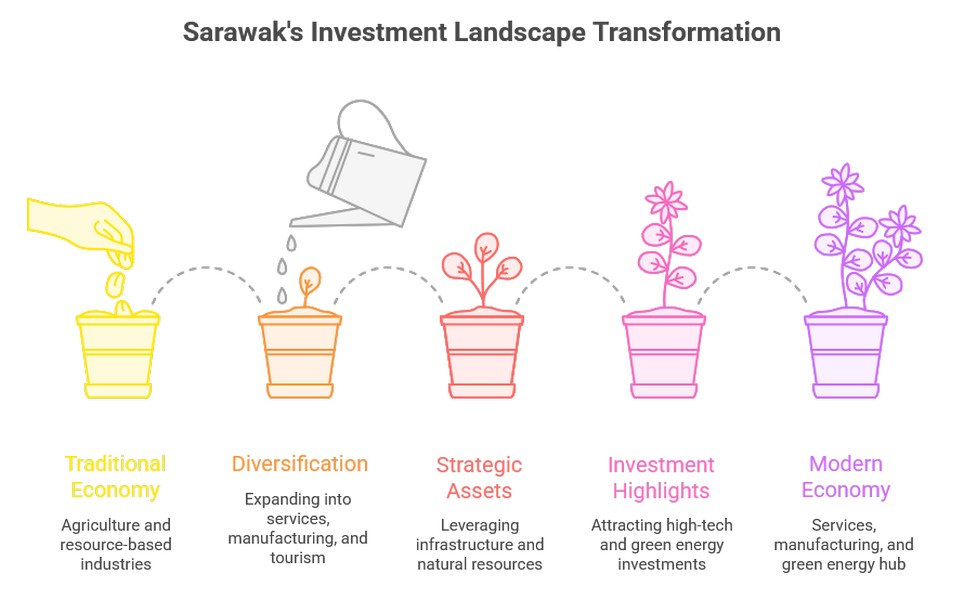
The Sarawak government targets an increased contribution of the digital economy to the state’s Gross Domestic Product by 2030, aligned with post-pandemic development strategies.
This transformation involves not only building broadband infrastructure or data centres but also integrating new technologies into traditional sectors such as agriculture, fisheries, and food processing.
Within this framework, blockchain can serve as a bridge between the conventional economy and high-value digital economics.
Blockchain technology is poised to be a powerful enabler in transforming Sarawak into a smart, sustainable, and inclusive digital economy, with applications in governance, trust, digital identity, supply chain traceability, financial inclusion, and green incentives.
From a market opportunity perspective, reports by Future Market Insights and Research and Markets estimate that the global halal food market, valued at USD 2.24 trillion in 2026, is projected to reach USD 3.66 trillion by 2030, growing at a 13.1% compound annual growth rate.
This growth is driven not only by the world’s Muslim population, estimated at over 1.9 billion, but also by rising demand among non-Muslim consumers who view halal as a symbol of cleanliness, safety, and ethical production.
This situation opens extensive opportunities for producer states like Sarawak to penetrate premium markets, provided they can comprehensively demonstrate supply chain integrity.
In the export context, Malaysia recorded continuously increasing halal export values annually, involving food products, ingredients, and downstream products based on livestock and marine resources.
Malaysia’s halal exports reached US$7 billion in the first half of 2025, accounting for 16.1% of national exports.
Sarawak, with strengths in fisheries, livestock, and commercial crops, is strategically positioned to expand its contribution.
However, in an increasingly competitive global trade environment, international buyers demand digitally verifiable and real-time proof of compliance.
Blockchain provides infrastructure that enables data related to raw material sources, slaughtering processes, certification, and logistics to be recorded permanently and immutably, thereby reducing risks of disputes and product recalls.
Blockchain provides trust where verification matters most, offering immutable halal certification records across industries and decentralised compliance mechanisms.
The economic impact of blockchain adoption is also evident from an investment perspective.
International investors typically assess levels of transparency, governance, and system efficiency before committing capital.
A halal ecosystem supported by distributed ledger technology signals that Sarawak is serious about modernising its compliance and traceability systems.
This has the potential to increase investor confidence in projects such as halal processing hubs, food industrial parks, and cold chain logistics centres.
The Tanjung Manis Halal Hub is expected to provide investment opportunities to investors keen to capitalise on the fast-growing global demand with an estimated market potential of US$4.5 trillion by 2030.
Furthermore, technology integration can reduce long-term costs associated with manual audits, repetitive documentation, and verification delays.
Moreover, blockchain development in the halal sector opens new employment and skills opportunities.
Demand for cybersecurity experts, system developers, data analysts, and digital compliance officers is expected to rise alongside ecosystem expansion.
For Sarawak, which is building a high-skilled workforce through local educational institutions, this development can support the state’s human capital development agenda.
Integration between the technology and agro-food sectors creates new, more complex, and higher-value chains compared to traditional models.
The Ministry of Science, Technology and Innovation has introduced various initiatives related to national blockchain infrastructure, while the Royal Malaysian Customs Department has explored blockchain-based platforms to enhance trade transparency.
Alignment between federal and state policies provides Sarawak with opportunities to develop a digital halal system aligned with national standards and easily integrated with international trading partners.
For investors and businesses seeking strategic entry into Asia’s most dynamic halal market, Sarawak presents an unparalleled value proposition.
The Tanjung Manis Halal Hub, spanning over 70,000 hectares and focusing on the entire food production supply chain, offers a ready-to-invest ecosystem with basic infrastructure and facilities to support agro-based industries.
With Sarawak’s commitment to digital transformation through the Sarawak Digital Economy Blueprint 2030, investors gain access to a future-ready environment where blockchain-verified halal integrity meets abundant natural resources, strategic geographic positioning, and proactive government support.
The state’s aggressive pursuit of agricultural modernisation through smart farming, precision agriculture, and global partnerships ensures that partners in Sarawak benefit from enhanced productivity, higher value-added downstream processing, and preferential access to premium export markets.
By choosing Sarawak as your halal investment destination, you align with a jurisdiction that combines Shariah integrity with technological sophistication, regulatory clarity, and a proven track record of facilitating business success.
The convergence of Sarawak’s rich agro-food heritage, digital innovation leadership, and strategic halal hub infrastructure creates a compelling opportunity for forward-thinking investors to capture significant market share in the rapidly expanding global halal economy.
Overall, the use of blockchain in Sarawak’s halal industry should be viewed as a long-term economic strategy, not merely a technical innovation.
In a global environment emphasising proof, transparency, and trustworthiness, states capable of offering robust digital verification systems will enjoy significant competitive advantages.
With abundant natural resources, commitment to digital transformation, and increasingly clear policy support, Sarawak has the potential to emerge as a model digital halal hub that combines Shariah integrity with the sophistication of modern technology.
References:
1. https://www.matrade.gov.my/en/source-from-malaysia/industries-capabilities/nation-branding/halal-industry
2. Halal Food Industry: ZipDo Education Reports 2026. (2026, February 12). ZipDo. https://zipdo.co/halal-food-industry-statistics/
3. DOSM. (2025). Department of Statistics Malaysia. Dosm.gov.my. https://www.dosm.gov.my/portal-main/release-content/economic-census-2023-halal-statistics
4. SarawakYES14. (2025, August 31). Halal Tech in Sarawak: Why Blockchain Matters for Young Entrepreneurs | SarawakYES! Sarawakyes.com. https://www.sarawakyes.com/halal-tech-in-sarawak-why-blockchain-matters-for-young-entrepreneurs/
5. Nizamuddin, M., Ainon Ramli, Zain, R. M., Kadir, S. A., Muhamad, & Ibrahim, I. (2025). Enhancing Halal Traceability in Broiler Supply Chains: The Role of Blockchain Technology. Journal of Advanced Research in Business and Management Studies, 41(1), 16–30. https://karyailham.com.my/index.php/arbms/article/view/674
6. Malaysian Investment Development Authority. (2024, July 3). Awg Tengah: Tanjung Manis Halal Hub to provide investment opportunities. https://www.mida.gov.my/mida-news/awg-tengah-tanjung-manis-halal-hub-to-provide-investment-opportunities/
7. Islamic Economy Academy. (2026, January 3). Tech Business Opportunities in the Islamic Economy in 2026. https://islamicea.com/tech-business-opportunities-in-the-islamic-economy-in-2026/
8. SESRIC. (2026, March 17). Halal Industry in OIC Member Countries: Challenges and Prospects. https://www.sesric.org/publications-detail.php?id=617
9. The Borneo Post. (2025, October 9). Blockchain to drive Sarawak’s smart, sustainable digital economy, says Deputy Premier. https://www.theborneopost.com/2025/10/09/blockchain-to-drive-sarawaks-smart-sustainable-digital-economy-says-deputy-premier/
10. Research and Markets. (2026). Halal Food Market Report 2026. https://www.researchandmarkets.com/reports/5744211/halal-food-market-report