
The Global and Regional ESG Landscape
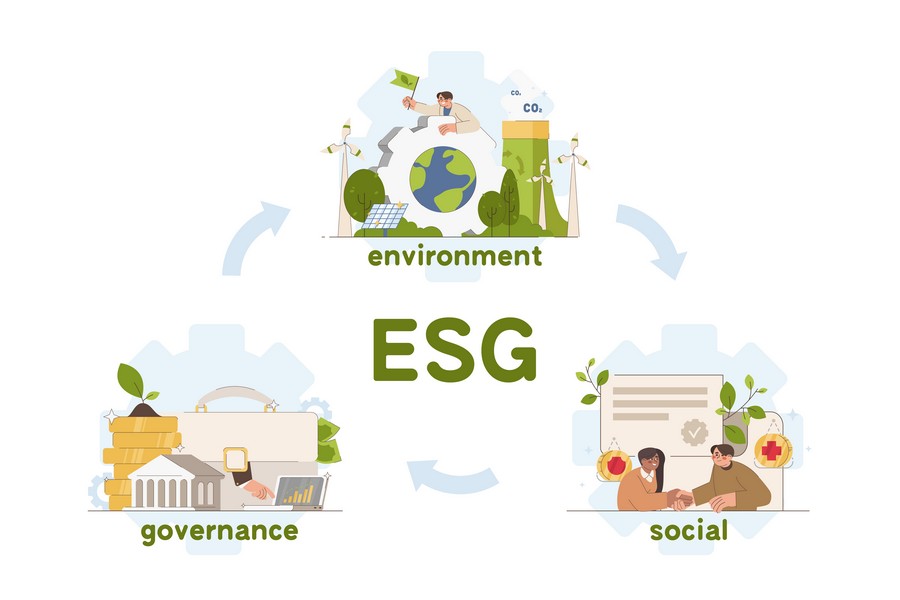
ESG has transformed from a niche idea into a central pillar of global finance.
Sustainable investment strategies—those that allocate capital based on ESG criteria—now account for trillions in assets, with a widely referenced estimate indicating around US$30 trillion in sustainable Assets Under Management (AUM) in the early 2020s.
This reflects an exponential growth within one decade.
At the same time, countries and markets are updating ESG reporting rules to make them clearer and more consistent.
Key changes include:
- The International Sustainability Standards Board (ISSB) has released IFRS S1 (General Sustainability Disclosures) and IFRS S2 (Climate-related Disclosures), establishing a globally recognised framework for ESG reporting.
- A growing number of jurisdictions, including Malaysia, are implementing or harmonising their sustainability reporting frameworks with these global standards, thereby facilitating comparability, transparency, and investor confidence.
- Investors and banks are paying more attention to ESG performance when deciding who to fund.
Firms with weak ESG practices may encounter elevated borrowing costs or reduced access to institutional and international funding.
- There is increasing emphasis on obtaining independent verification—through audits—of ESG disclosures, particularly greenhouse gas (GHG) emissions covering Scope 1 and 2, and eventually Scope 3.
Within ASEAN and the broader Asian region, ESG adoption is progressing but at differing speeds.
Economies with more advanced capital markets and regulatory frameworks, such as Singapore, Malaysia, and Thailand, have moved ahead more rapidly, while others are still developing the capacity to encourage ESG adoption among corporations and SMEs
Malaysia’s ESG Trajectory: National Framework, Regulatory Evolution, and Market Adoption
Regulatory Development: NSRF and Mandatory Reporting
Malaysia has shifted from voluntary CSR reporting to a comprehensive ESG reporting system based on global benchmarks.
In September 2024, Malaysia took a big step in ESG reporting when the Securities Commission (SC) launched the National Sustainability Reporting Framework (NSRF), officially adopting ISSB IFRS S1 and S2 as the national baseline for ESG reporting.
The NSRF will be implemented in phases:
2025: Main market-listed companies with a market capitalisation of RM two billion or more must comply with ISSB standards.
2026: The rest of the main market-listed companies follow.
2027: ACE market-listed companies and large non-listed firms with annual revenue of RM two billion or above.
Prior to this, sustainability reporting was already required for listed companies under Bursa Malaysia’s Sustainability Reporting Framework since 2020.
The State of Reporting (before NSRF enforcement)
In 2023-24, many Malaysia companies had already begun voluntarily reporting on ESG or sustainability matters.
According to ESGJourny, 792 of 808 Main Board companies (98%) published sustainability reports.
But a closer look by the SC-World Bank ESG Disclosure Assessment in 2023, which studied 90 listed companies, revealed some weak spots.
While governance and social disclosures were generally satisfactory, environmental reporting—particularly regarding climate change, biodiversity, and nature-related risks—was insufficient.
Big companies tended to report better, while smaller firms fell behind in both coverage and quality.
This shows that, while ESG reporting is becoming more common, there’s still work to do, such as making frameworks like the NSRF and future assurance requirements essential.
ESG Adoption Among SMEs and Financial Market Developments
SMEs represent a vital segment of Malaysia’s business landscape, making up the majority of enterprises.
According to a 2025 national survey by Alliance Bank and partners, ESG awareness among SMEs skyrocketed from around 14% in 2023 to 80% in 2025.
The survey also reported that around 60% of Malaysian SMEs have implemented some form of ESG practices.
This growth has been driven by buyer and investor expectations, operational efficiencies, supply-chain requirements, and access to finance through instruments such as green financing and ESG-linked loans.
Collectively, these developments suggest that ESG considerations are moving beyond symbolic gestures to become an integral part of capital market operations, corporate governance, and strategic business planning in Malaysia.
ESG in Sarawak: Current Developments and Local Implementation
In May 2025, Sarawak took a big step in SME sustainability when Alliance Bank Malaysia Berhad partnered with the Sarawak government, InvestSarawak, Monash University Malaysia, and the UN Global Compact Network Malaysia & Brunei to publish its first Sarawak-focused ESG report—Navigating ESG in Sarawak: Insights from SMEs.
Report Highlights (106 Sarawak SMEs)
- ESG Awareness: Roughly 62% of SMEs reported familiarity with ESG concepts.
- Adoption Status: About 66% had begun incorporating ESG practices, including some “unconscious adopters” who implement ESG-aligned actions without formally labelling them as ESG.
- Integration Depth: Among adopters, approximately 44% had fully integrated ESG into their strategies, while 22% applied ESG at a smaller scale.
- Pillar Breakdown: Governance led at around 45%, Social at 44% and Environmental at 41%.
- Comprehensive Reporting: Only about 20% of SMEs reported practising, documenting, and formally reporting across all three pillars at a high level.
- Future Intentions: Among non-adopters (around 34%), 98% intend to adopt ESG, with 59% planning to do so within the next two years.
In short, ESG is gaining real momentum in Sarawak SMEs, and those who haven’t started yet are showing strong intentions to join the movement.
Institutional and Governmental Indicators
Sustainability efforts in Sarawak aren’t just for SMEs.
The state’s broader development agenda and institutional frameworks are increasingly oriented toward embedding ESG principles:
- The Sarawak state government, via InvestSarawak, facilitates SME adoption through capacity-building initiatives, financial support, and implementation guidance, as demonstrated in the 2025 SME ESG report.
- The Post COVID-19 Development Strategy (PCDS) 2030 explicitly emphasises sustainability, competitiveness, and long-term resilience as pillars of the state’s transformation agenda.
The ESG report helps align SMEs with this strategic vision.
- Larger firms, including state-linked entities, demonstrate slower and more uneven ESG uptake, reflecting challenges related to cost, expertise, and data collection.
In many cases, ESG continues to be perceived as a “nice to have” rather than a structural imperative, especially among SMEs without international exposure or supply-chain pressures.
Nevertheless, the commitment from institutions is evident: Sarawak is laying the foundations of an ESG ecosystem, beginning with SMEs.
Sarawak and Malaysia in the Regional and International ESG Context
ASEAN: Progress at Varying Speeds
A cross-ASEAN comparison of non-financial firms (Indonesia, Malaysia, Singapore, Thailand, Philippines) shows that ESG disclosure remains nascent, with only about 8.8% of listed companies voluntarily reporting their ESG activities.
This limited disclosure is largely due to the region’s structural diversity—ranging from advanced economies with established governance frameworks to developing nations with constrained regulatory capacity.
Such variation naturally affects the pace and quality of ESG integration.
Nonetheless, firms that do report ESG information show tangible financial benefits.
Studies indicate a positive link between ESG reporting and firm performance, including improvements in ROA and ROE.
A 2018-2022 analysis of 37 firms affirmed these gains, while a 2025 study of 125 firms found improvements in ROA and Tobin’s Q.
However, profit margins do not consistently increase, particularly when companies adopt ESG practices due to herd behaviour rather than substantive investment.
From a ratings standpoint, MSCI data shows a gradual but meaningful improvement.
Notably, Malaysia and Singapore continue to hold the highest proportion of ESG “leaders” within ASEAN as of January 2025, although no firms have yet obtained the AAA rating.
Overall, ASEAN’s ESG maturity is mixed but gaining momentum, with more advanced economies leading the shift from voluntary disclosure to strategic ESG value creation.
Malaysia’s Relative Position
In the ASEAN region, Malaysia stands out as one of the more prepared markets when it comes to ESG—thanks to clearer regulations, stronger reporting structures, and rising company participation.
Findings from the 2023 UNGCMB-Bursa study indicate that many Malaysian companies were already prepared—or at least intending—to embark on ESG reporting before mandatory implementation, prioritising the governance pillar over environmental and social aspects.
Nonetheless, major gaps remain.
Reporting on biodiversity, climate risks, and supply-chain emissions is still limited, placing Malaysian companies at a potential disadvantage as global markets tighten expectations on environmental disclosures.
Recommendations for Sarawak’s Stakeholders
Given Sarawak’s rising momentum and the opportunities ahead, the following practical recommendations are proposed for key stakeholders in the state:
Build skills and awareness across SMEs: Strengthening ESG capability begins with targeted training.
Workshops, industry-specific guidelines, and simplified toolkits—covering energy-saving methods, waste-reduction systems, and occupational safety—should be prioritised.
The 2025 SME ESG report provides an excellent starting benchmark for identifying skill gaps.
Improving financial support for ESG transitions: Collaborative mechanisms involving banks, DFIs, and state agencies such as InvestSarawak can accelerate ESG adoption through concessional financing, tax incentives, grants, and technical advisory programmes for ESG-related upgrades.
Create ESG pull factors through supply-chain requirements: Introducing ESG expectations into procurement, particularly among GLCs and the state government, will send strong market signals.
Prioritising ESG-performing suppliers can drive adoption among SMEs and smaller vendors who rely on these supply-chain linkages.
Strengthen credibility through assurance and comprehensive data systems: To mitigate greenwashing and boost investor confidence, companies should prepare for independent assurance of ESG disclosures.
Priority areas include Scope 1 and Scope 2 GHG emissions, with Scope 3 to follow.
As NSRF implementation progresses, assurance is likely to become a norm by 2027.
Align development with global sustainability expectations: Through PCDS 2030 and upcoming policies like the Sarawak Ownership Policy, the state can formalise ESG ambitions and require state-linked entities and contractors to meet defined sustainability criteria.
Conclusion
ESG has moved beyond being a niche corporate initiative to becoming a core driver of economic growth, corporate competitiveness, and societal resilience.
Globally, stronger reporting standards, investor scrutiny, and flows of sustainable capital show that ESG is reshaping markets.
Malaysia is positioning itself as a regional leader through NSRF and alignment with ISSB standards, though gaps remain in climate, biodiversity, and supply-chain reporting.
Additionally, Sarawak is gaining momentum at a crucial moment.
The state’s first SME-focused ESG report highlights encouraging levels of awareness and early adoption, underpinned by institutional support and the policy direction of PCDS 2030.
While many SMEs are still getting started, their clear intention to adopt ESG shows they see sustainability as linked to competitiveness, efficiency, and market access.
The next step is to scale up adoption, which will require skills development, financing support, supply-chain incentives, and independent assurance.
Across ASEAN, ESG progress remains uneven, with Malaysia and Singapore taking the lead in disclosure and governance standards.
For Sarawak, this creates both opportunity and responsibility: accelerating ESG adoption now positions the state strongly within a fast-evolving regional ecosystem, and prepares its industries to meet rising global expectations.
Ultimately, ESG isn’t just a box to tick.
Embedding it across Sarawak’s public and private sectors builds a resilient future-ready economy—one that draws investment, protects natural resources, empowers the workforce, and secures long-term prosperity.
With coordinated commitment from government, financial institutions, corporations, and SMEs, Sarawak can transform ESG from an emerging trend into a strategic foundation for sustainable development.
References:
- ESG (Environmental, Social, Governance)
- Who Cares Wins: Connecting Financial Markets to a Changing World
- What is the History of ESG?
- An Introduction to Sustainability and ESG
- Global Sustainable Review Finds US$30 trillion Invested in Sustainable Assets
- Global ESG Assets Predicted to Hit US$40 Trillion by 2030, Despite Challenging Environment, Forecasts Bloomberg Intelligence
- Global Sustainability Disclosure Standards Converge: ISSB Finalizes IFRS S1 and IFRS S2
- ISSB issues inaugural IFRS Sustainability Disclosure Standards
- IFRS S1 & S2: A Milestone for Global Sustainability Standards
- Global Sustainable Investment Review 2022
- IFRS Sustainability Disclosure Standards (ISSB Standards)—Application Around the World, Jurisdictional Profile: Malaysia
- Malaysia Consults on Adopting Mandatory ISSB Sustainability Disclosure Standards
- Malaysia Launches Consultation on Adoption of IFRS Sustainability Reporting Standards
- Malaysia’s Sustainability Reporting Aligns with Global ISSB Standards in IFRS Jurisdictional Profile
- An Overview of Current Sustainability Disclosures in ASEAN Countries
- Advancements in ESG Standards and Implementation Timelines in Malaysia
- ESG Reporting in Malaysia: A Guide to Bursa Malaysia’s Enhanced Sustainability Framework
- Driving Sustainable Growth: A Guide to ESG Compliance in Malaysia
- ESG Disclosure Assessment of Malaysia’s Listed Companies and Recommendations for Policy Development
- Top 10 ESG Reporting Companies in Malaysia
- Herding Behaviour, ESG Disclosure, and Financial Performance: Rethinking Sustainability Reporting to Address Climate-Related Risks in ASEAN Firms
- The Impact of Environmental, Social, and Governance (ESG) on Financial Performance (Empirical Study of ASEAN Firms Listed on the Nikkei Asia 300 Index 2018-2022)
- Leaders and Upgrades in 2024